



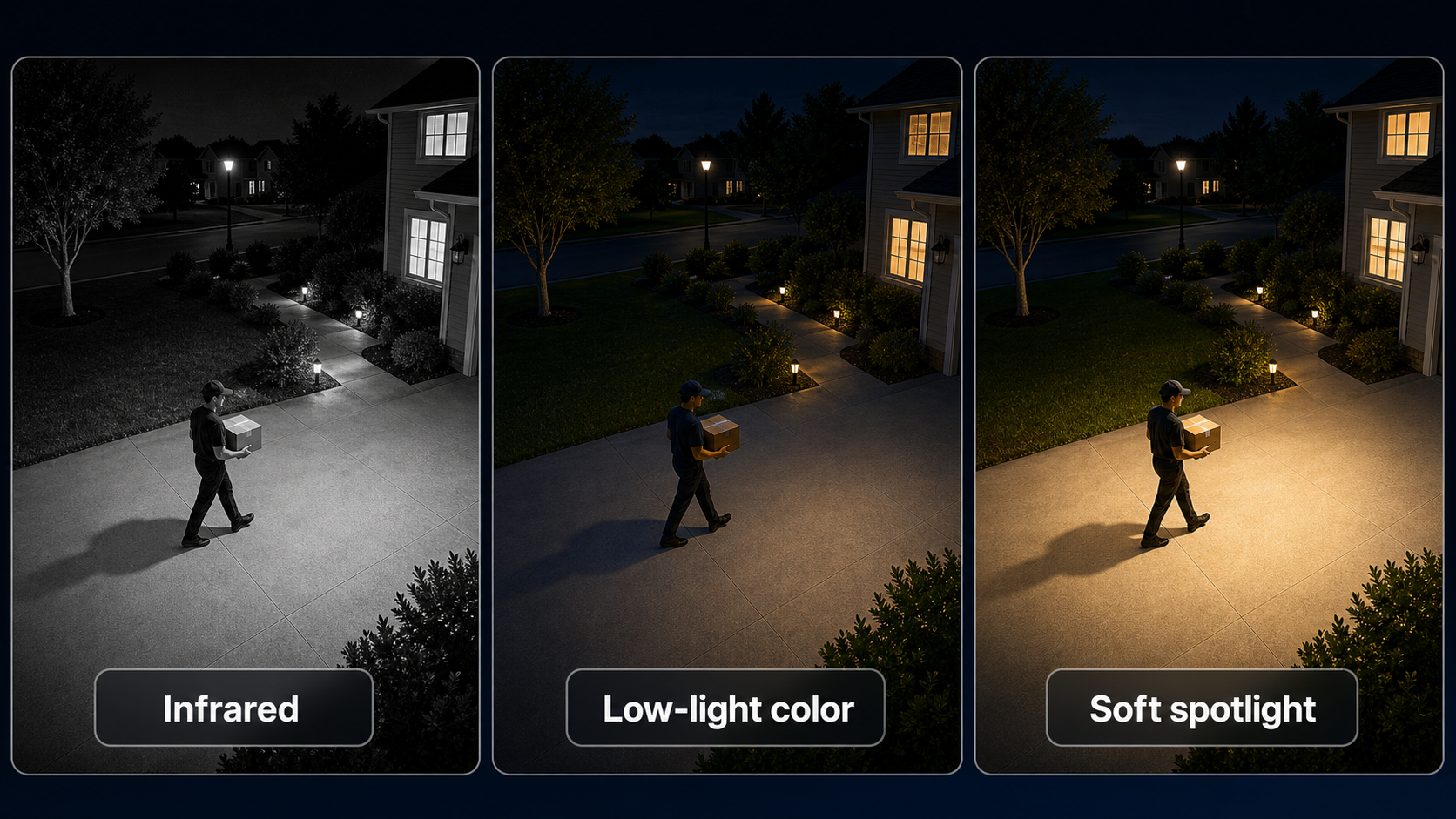
Night vision is one of those security camera features that sounds simple until you try to choose a setting. Some cameras show black-and-white footage with infrared. Some use a spotlight for color. Some can keep more color in low light without turning on a visible light at all.
Not every camera view automatically needs the brightest mode. A driveway may benefit from color and deterrence, while a side yard may need quiet, discreet monitoring. A porch may already have enough natural light, while a dark backyard may need help from a soft spotlight or floodlight.
This guide breaks down the main security camera night vision options and shows when each one makes sense.
The Short Answer
Choose infrared black-and-white night vision when you want reliable, discreet viewing in the dark and color detail is not the priority.
Choose color night vision with a spotlight when you want clearer color clues, stronger deterrence, and you are comfortable with visible light turning on.
Choose a softer low-light color mode, such as TrueColor-style night vision, when you want a more balanced middle ground: better color detail without the harsh feel of a bright spotlight.
Choose a covert full-color or low-light color mode when you want the camera to stay quiet and avoid turning on a visible light, but remember that these modes depend more on sensor quality and available ambient light.
Start With the Night Vision Job
Before comparing mode names, ask what the camera needs to do at night. Most confusion comes from treating night vision as one feature, when it is really a set of tradeoffs.
A camera watching a package area may need color detail. A camera watching a side gate may need discretion. A camera over a driveway may need a visible deterrent. A battery camera in a quiet area may need to avoid unnecessary light use.
Use the mode that fits the scene instead of forcing one setting everywhere.
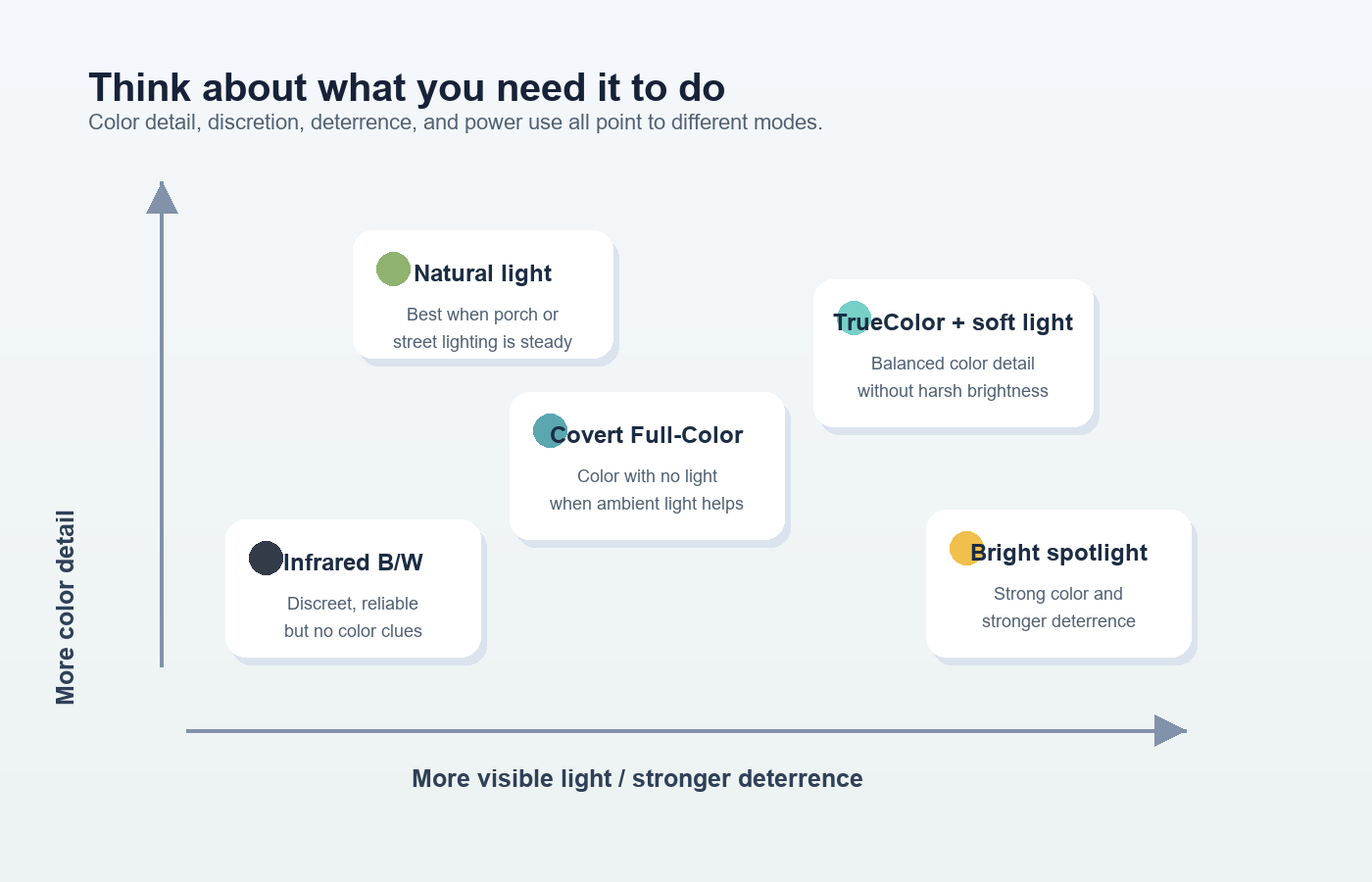
The right night vision mode depends on whether you care more about color detail, discretion, deterrence, or using existing light.
Security Camera Night Vision Modes Compared
| Infrared black-and-white | TrueColor with soft spotlight | Covert full-color | Bright spotlight color | Natural light or floodlight |
|---|---|---|---|---|
|
|
|
|
|
Infrared Black-and-White: Best for Quiet, Reliable Night Coverage
Infrared night vision is the classic security camera look: black-and-white video in the dark. The camera uses infrared light that people usually do not see as a bright spotlight, then records the scene in grayscale.
This is often the safest default for side yards, alleys, gates, sheds, and darker spaces where you do not want a light switching on every time motion is detected.
The tradeoff is detail type. Infrared can show movement, shapes, faces, and objects, but it will not preserve color. If knowing whether a car was red or silver matters, infrared alone may not be enough.
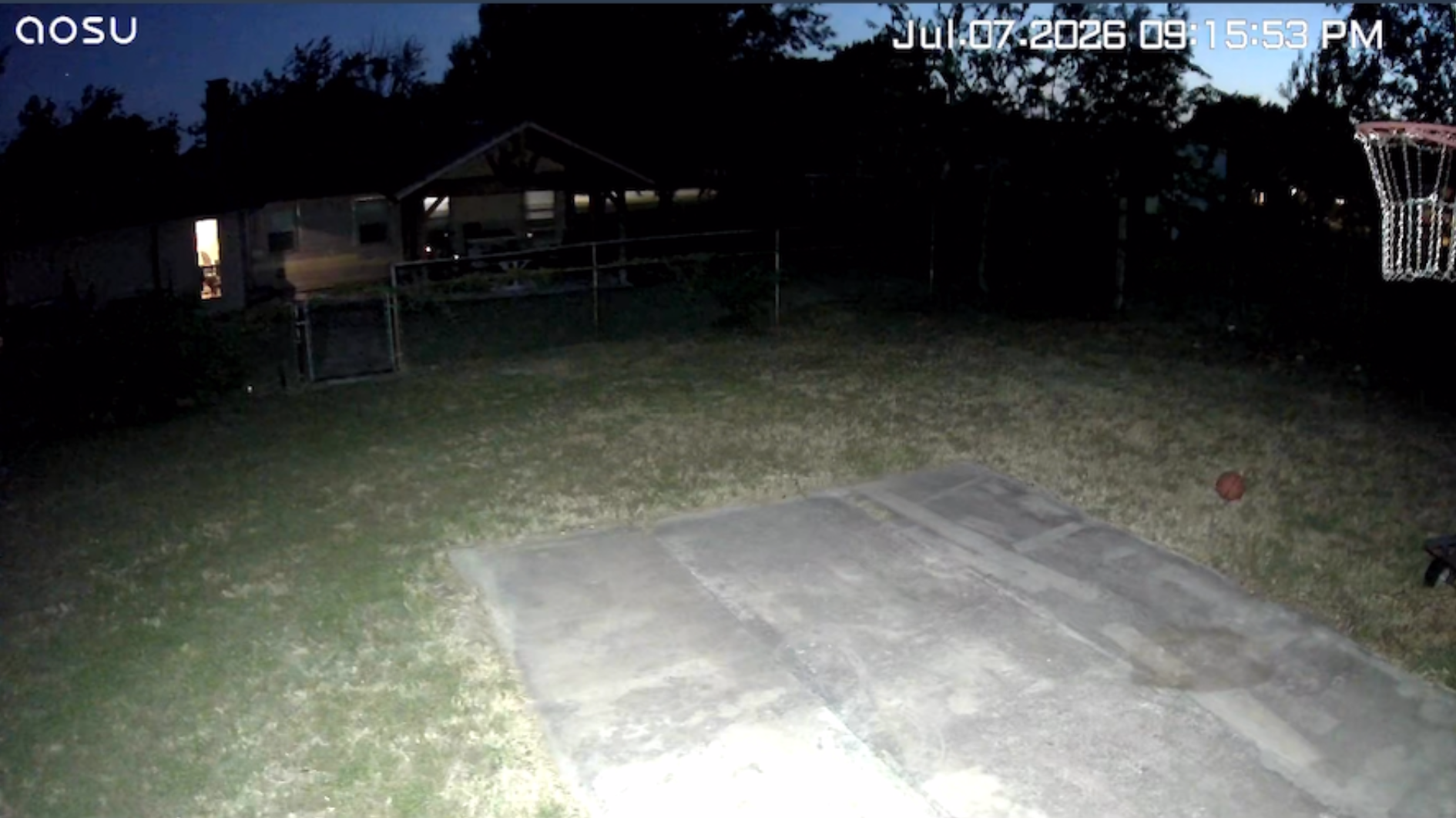
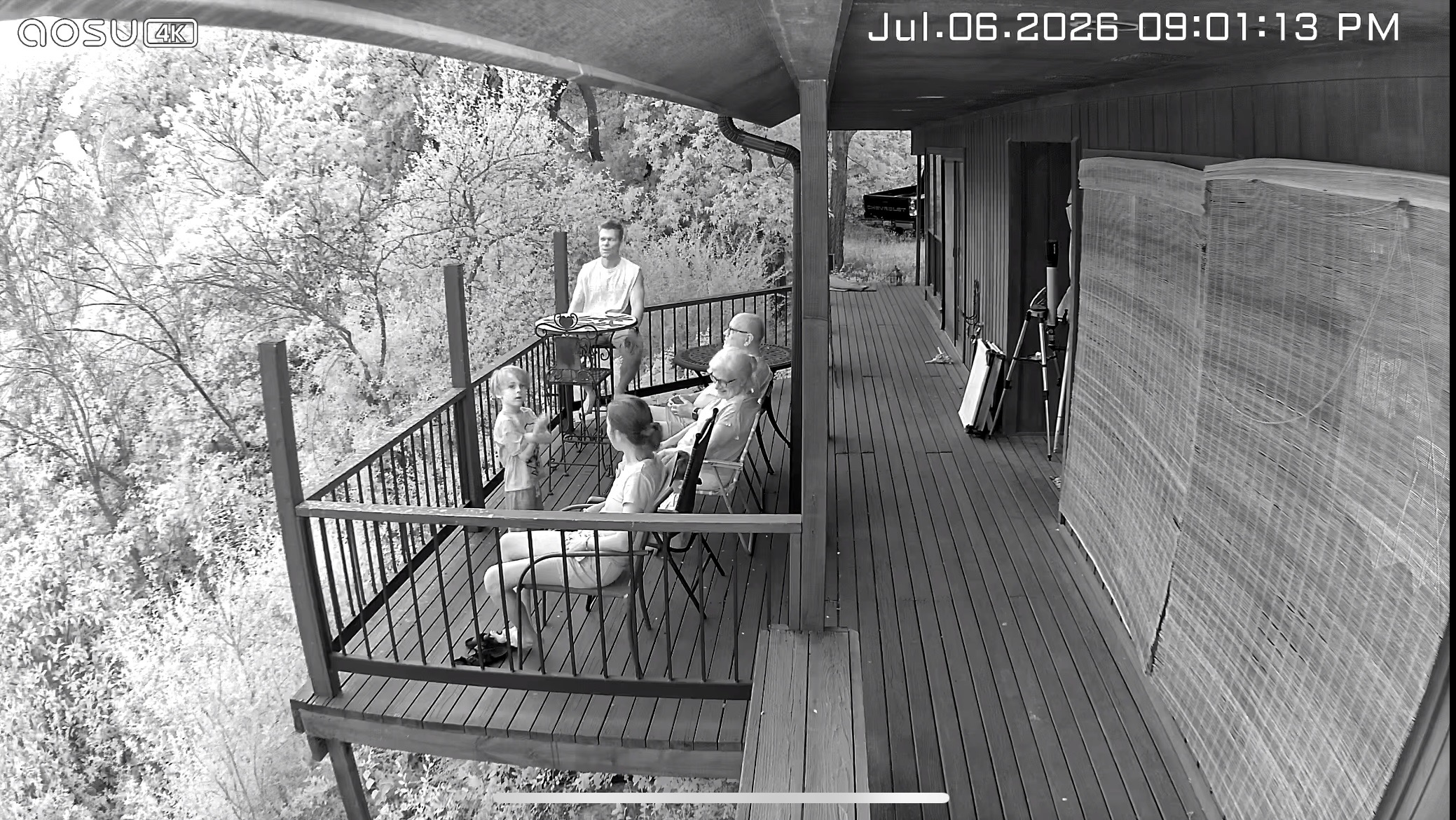 Infrared night vision can make a dark scene readable without turning on a bright spotlight, but the footage stays black and white.
The above image was captured by the aosu SolarCam D1 Max
TrueColor With a Soft Spotlight: Best for Balanced Color Detail
A soft spotlight color mode is useful when you want color footage but do not want the scene to feel like a floodlight switched on. This is the idea behind TrueColor-style night vision: add enough gentle light to help the camera capture color while keeping the effect more homeowner-friendly.
This mode can make sense for porches, driveways, walkways, and package areas. It can help with practical details such as clothing color, vehicle color, package placement, and the direction someone walked.
The main thing to check is how the light behaves. A good soft-light mode should avoid overexposing faces, shining directly into neighbor windows, or triggering constantly from harmless motion.
Covert Full-Color: Best When You Want Color Without Turning on a Light
Covert full-color night vision is the more subtle option. Instead of turning on a visible light, the camera uses sensor performance and available ambient light to keep more color in the image.
This can be valuable when you do not want to announce the camera, disturb the area, or make the light itself part of the experience. It is especially appealing for quiet front yards, shared driveways, side paths, or places where a spotlight would feel too obvious.
The tradeoff is that no-light color depends heavily on the camera and the scene. A larger or more capable sensor can help, but a completely dark area is still a hard environment. If there is no moonlight, porch light, streetlight, or nearby ambient light, covert color may look dimmer than a spotlight-assisted mode.
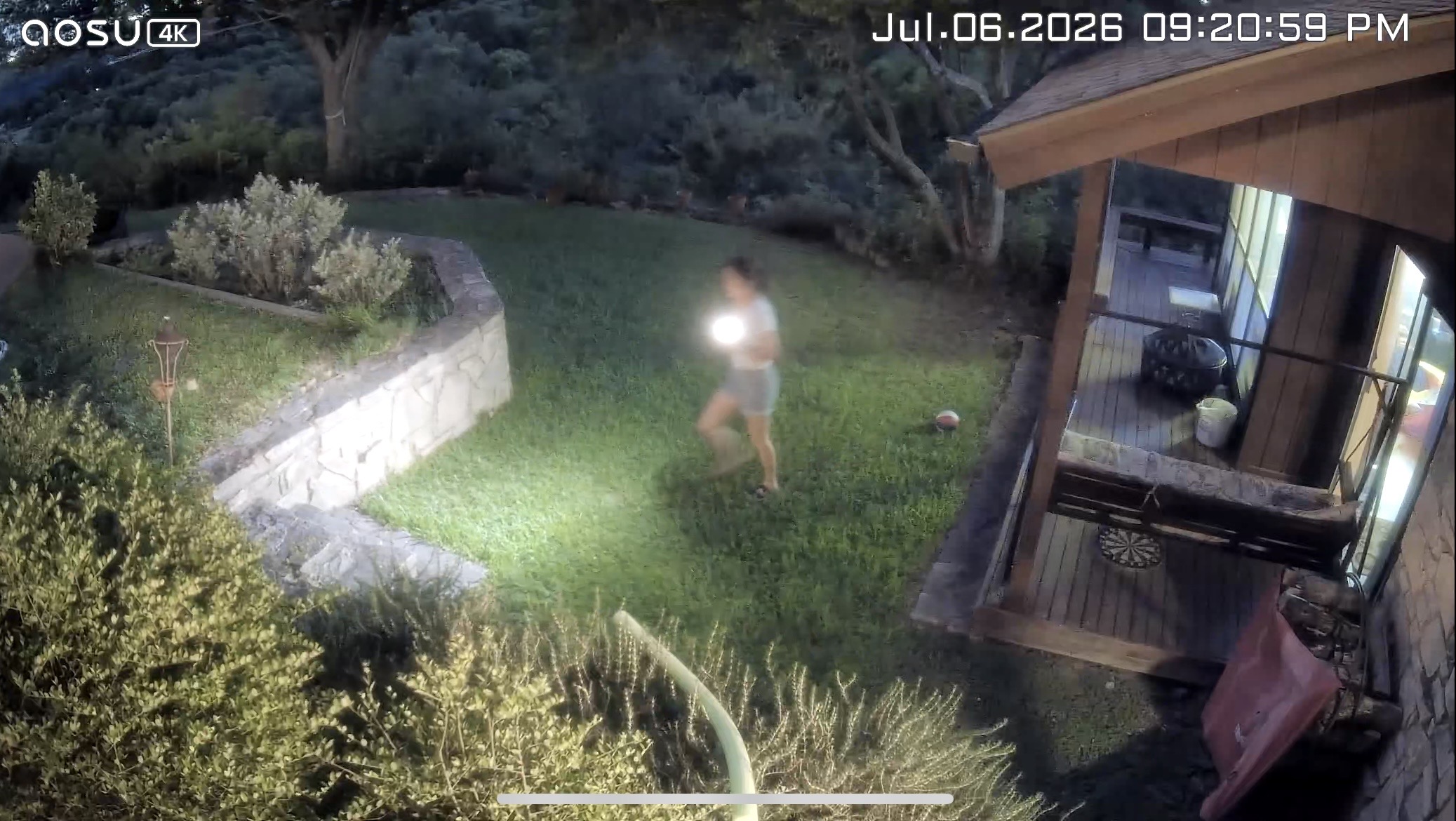 A discreet full-color mode can preserve more natural color in low ambient light without turning on a spotlight, though the result depends on the scene and sensor.
The above image taken from aosu T2 Ultra footage.
Bright Spotlight Color: Best for Deterrence and Clear Color Scenes
A bright spotlight mode is the most direct way to get color at night. When motion is detected, the camera turns on visible light so the image has more color and the person in the area knows the camera or light is active.
This can be useful for driveways, detached garages, tool sheds, and places where you want the light to act as part of the deterrent.
However, brighter is not always better. A strong light can annoy neighbors, shine into windows, attract bugs, drain battery faster, or create blown-out faces if the camera is too close to the subject.
Natural Light and Floodlights: Best When Lighting Is Part of the Setup
Sometimes the best night vision setting is not a camera mode at all. If your porch light, path light, streetlight, or landscape lighting already gives the camera enough light, you may be able to use a color or low-light mode more effectively.
An always-on floodlight can also make sense in high-priority areas where visibility matters more than subtlety. This is different from a motion spotlight because the scene stays consistently lit.
The tradeoff is comfort and control. Permanent lighting should be aimed carefully so it improves the camera view without creating glare, hard shadows, or light spill into neighboring spaces.
 Floodlights can light up a space to make it more usable at night, or be motion-activated for crime deterrence. However, it's important to consider impact on neighbors.
Above image is from the aosu Floodlight Cam Pro
Which Night Vision Mode Fits Each Area?
- Front porch or package area
Use soft spotlight color or existing porch light when package details and clothing color matter. Infrared is still fine if you care more about quiet monitoring.
- Driveway
Use color with a soft or bright spotlight if vehicle color and visible deterrence matter. If the driveway already has good ambient light, covert full-color may be enough.
- Side yard or gate
Use infrared or covert full-color if you want the camera to stay discreet. A bright spotlight can work, but only if it will not shine into private or neighboring areas.
- Backyard
Use infrared for quiet monitoring, soft color if you want more detail, or a floodlight setup if the area is large and you want consistent visibility.
- Detached garage or shed
Use bright spotlight color when deterrence is important, or infrared if you want low-profile recording without calling attention to the camera.
Do Night Vision Modes Affect Battery and Footage?
Night vision mode can affect more than image style. Any mode that turns on visible light may use more power than a quiet infrared or low-light mode, especially if motion happens often.
Night footage can also change how useful your saved clips are. Color clips may make review easier, but black-and-white infrared clips may be perfectly adequate for confirming movement or checking an area.
If your camera records many night events, also think about storage. Higher-detail clips, longer recordings, and frequent spotlight events can all affect how quickly storage fills, depending on your camera system.
Learn how security cameras store footage
Compare cloud storage vs local storage
Common Mistakes to Avoid
- Assuming color night vision is always better
Color is helpful, but infrared may be better if you need discretion, lower light output, or reliable viewing in very dark areas.
- Using a bright spotlight in the wrong place
A spotlight can deter activity, but it can also annoy people if it faces windows, sidewalks, or neighboring property.
- Ignoring ambient light
Streetlights, porch lights, landscape lights, and moonlight can change which mode works best. Test at night instead of choosing from daytime assumptions.
- Forgetting to adjust motion zones
If lights turn on constantly for cars, branches, or sidewalk traffic, adjust detection zones and sensitivity before blaming the night vision mode.
To Wrap Up
Choosing the right security camera night vision mode is really about choosing the right tradeoff. Infrared is quiet and reliable. Soft color modes add useful detail without feeling too harsh. Covert full-color can preserve color without turning on a light when the sensor and ambient light are strong enough. Bright spotlights help with deterrence when visible light is welcome.
The best setup may use different modes in different places. Test your porch, driveway, side yard, and backyard at night, then choose the mode that gives you the right balance of detail, discretion, comfort, and visibility.
FAQs
What is the best night vision mode for a security camera?
There is no single best mode for every home. Infrared is best for discreet black-and-white viewing, spotlight color is best for clear color and deterrence, and low-light or covert color modes are best when you want color without a bright light.
Is color night vision better than infrared?
Color night vision is better when color details matter, such as clothing, vehicles, and packages. Infrared can be better for quiet monitoring in very dark areas where you do not want visible light.
Can a security camera see in color without a spotlight?
Some cameras can keep more color in low light without turning on a visible spotlight, especially if they have a capable sensor and some ambient light. In total darkness, a spotlight or infrared mode may still work better.
Should I leave a floodlight on all night for my security camera?
An always-on floodlight can help in high-priority areas, but it should be aimed carefully. It may not be necessary if your camera's infrared, low-light color, or motion spotlight mode already gives you usable footage.