




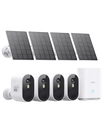
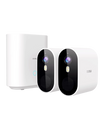
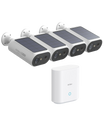

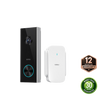
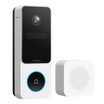
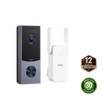


A doorbell camera answers a narrower question than a security camera: who is at the door, and what did they do with the package. That is why the field of view is tall rather than wide — you want head-to-toe and the doorstep, not the street.
All three aosu doorbells record without a subscription, and each takes a different approach to power.
Choose your video doorbell
- Video Doorbell Pro 2K with a 166° ultra-wide angle, wireless and battery-powered with a stated 180-day battery life, AI detection, and an aosuBase Mini included so recordings stay local. No monthly fees. Works with Alexa and Google Assistant.
- Video Doorbell SE 2K Full HD with a 170° ultra-wide angle for head-to-toe video, two-way voice, and reduced false alerts. Package monitoring without a subscription.
- Video Doorbell R1 Ultra 5MP UHD with enhanced WDR for backlit doorways, 60 days of loop recording, a 166° field of view in a 4:3 aspect ratio, and detection that combines PIR, radar and AI to trigger earlier with fewer unnecessary alerts. Power options fit either setup.
Battery or existing doorbell wiring
A battery doorbell mounts anywhere in minutes and is the only option if there is no existing chime wiring — common in flats and newer builds. Wiring into an existing doorbell circuit removes recharging from the picture. The R1 Ultra is the flexible one here; the Pro is the straightforward wire-free choice.
Whichever you pick, check the mounting height first: too high and you record the tops of heads, too low and a delivery box fills the frame.
Why the aspect ratio matters more than the megapixels
Doorbell footage is mostly about a person standing close to the lens and a parcel on the ground. A 4:3 frame, as on the R1 Ultra, keeps both in shot; a wide 16:9 frame spends its pixels on the neighbours' hedge. WDR matters for the same practical reason — a doorway is usually a dark porch against a bright street, and without it faces come out as silhouettes.

