



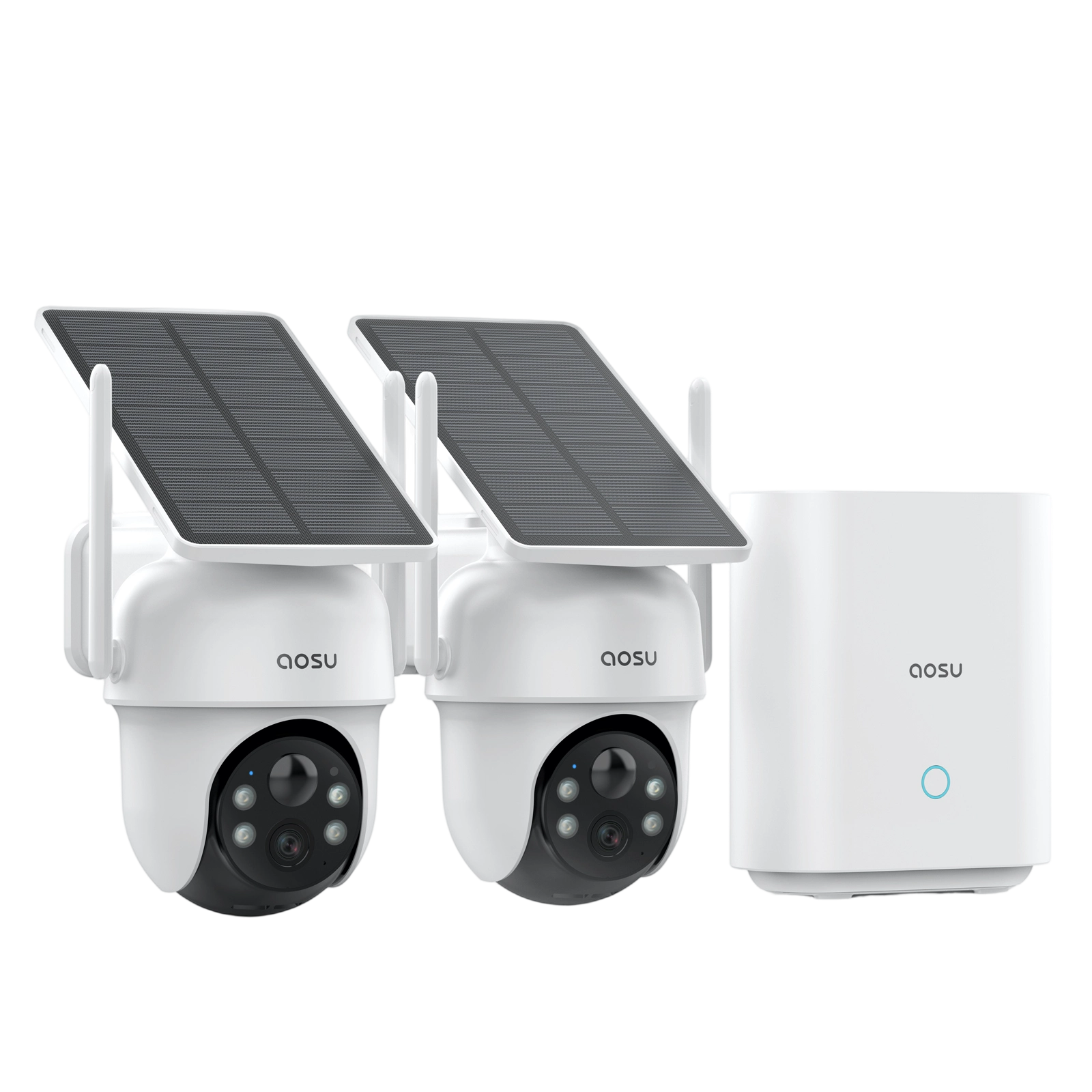
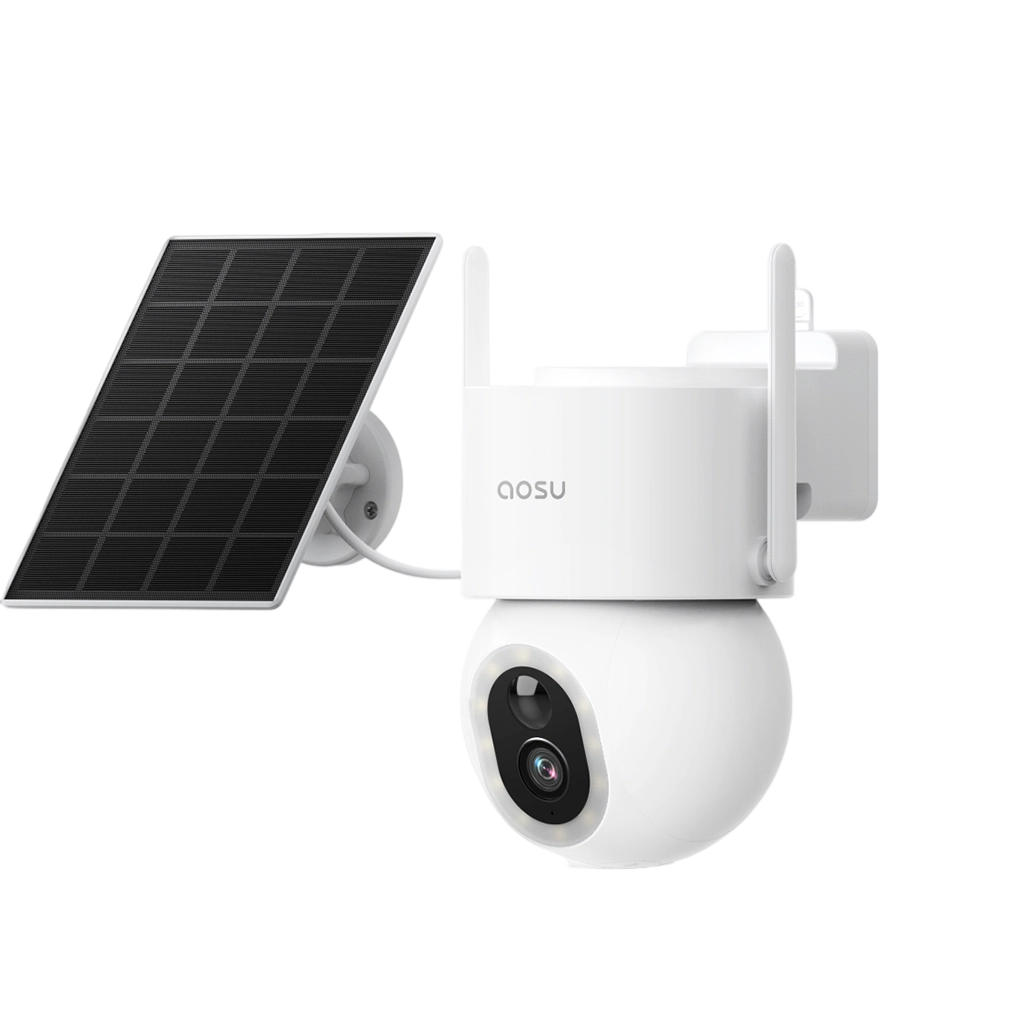
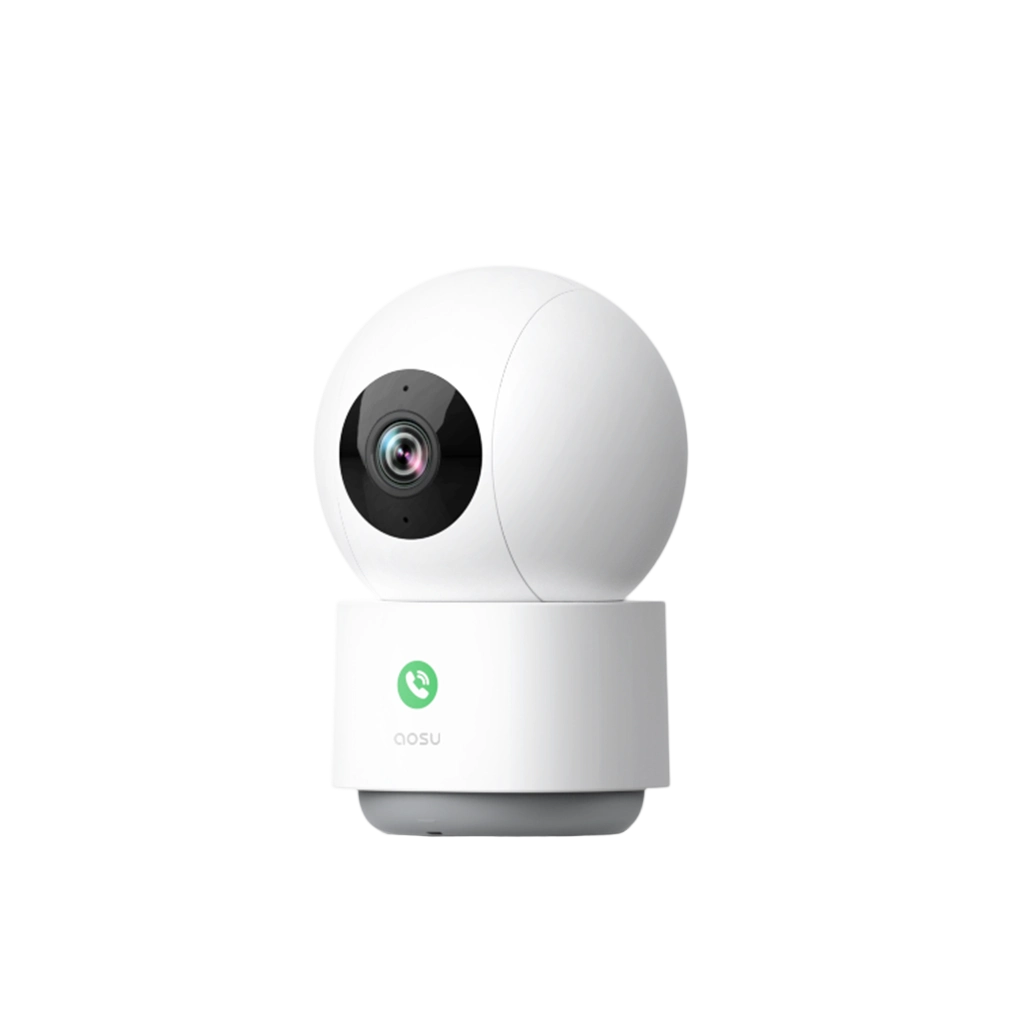
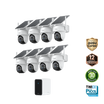
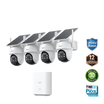
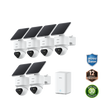
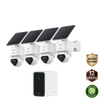
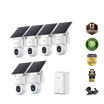
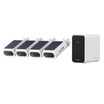

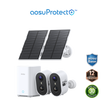
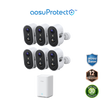
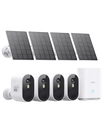
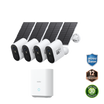
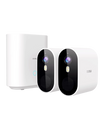
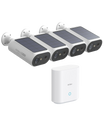
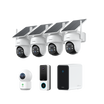
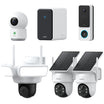
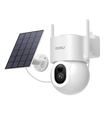
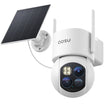
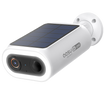
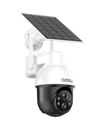
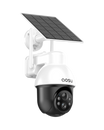
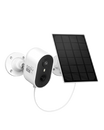
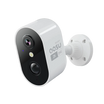
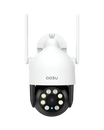

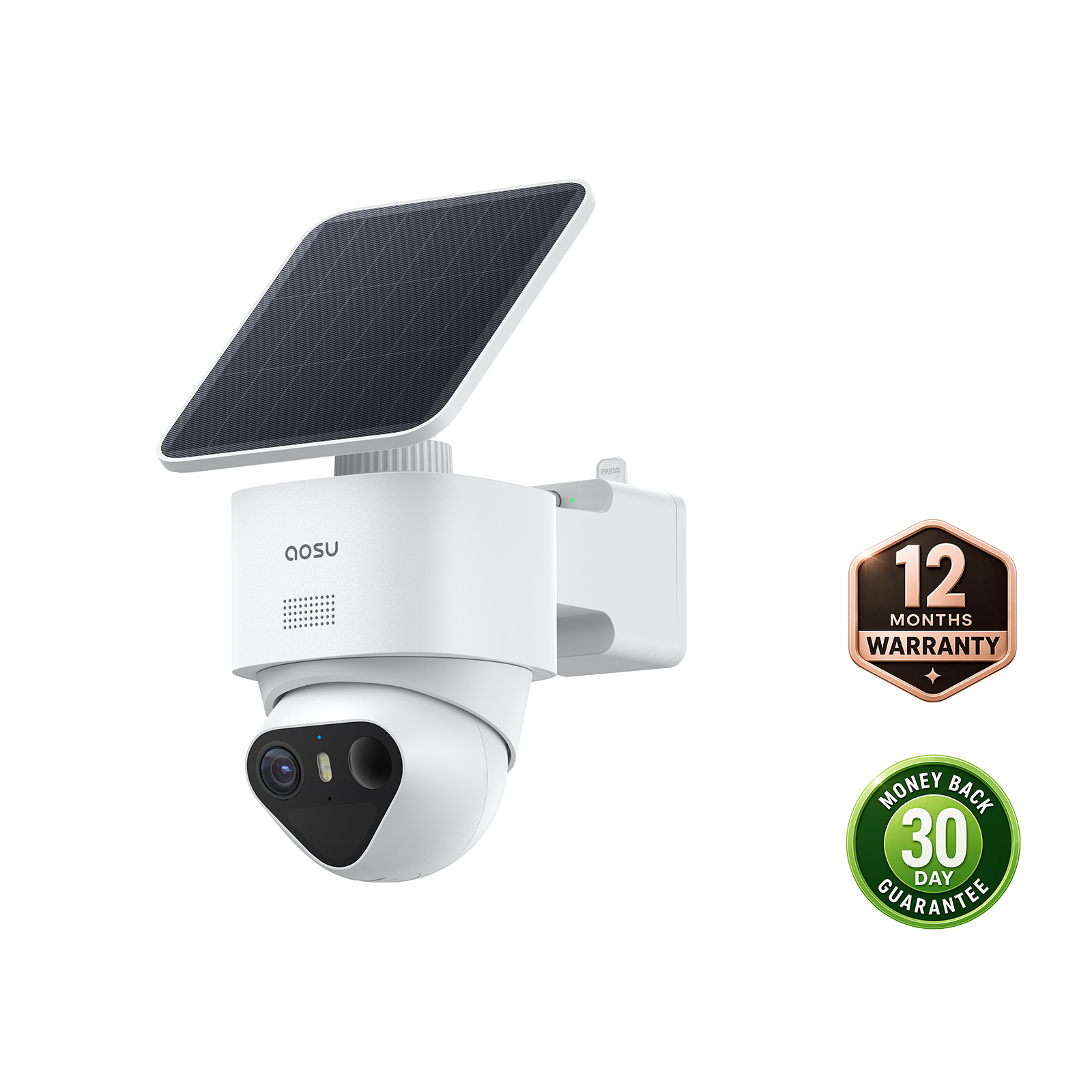


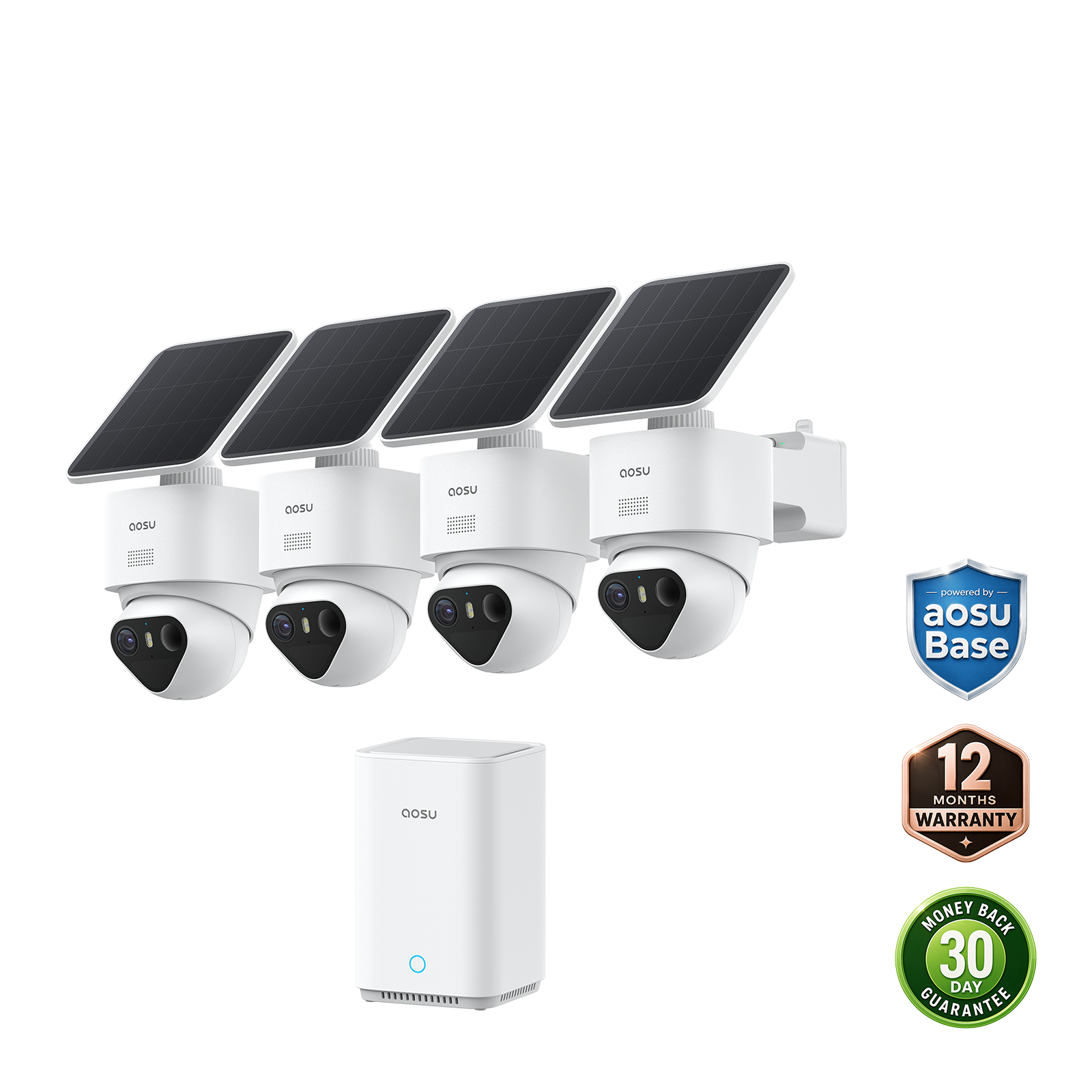


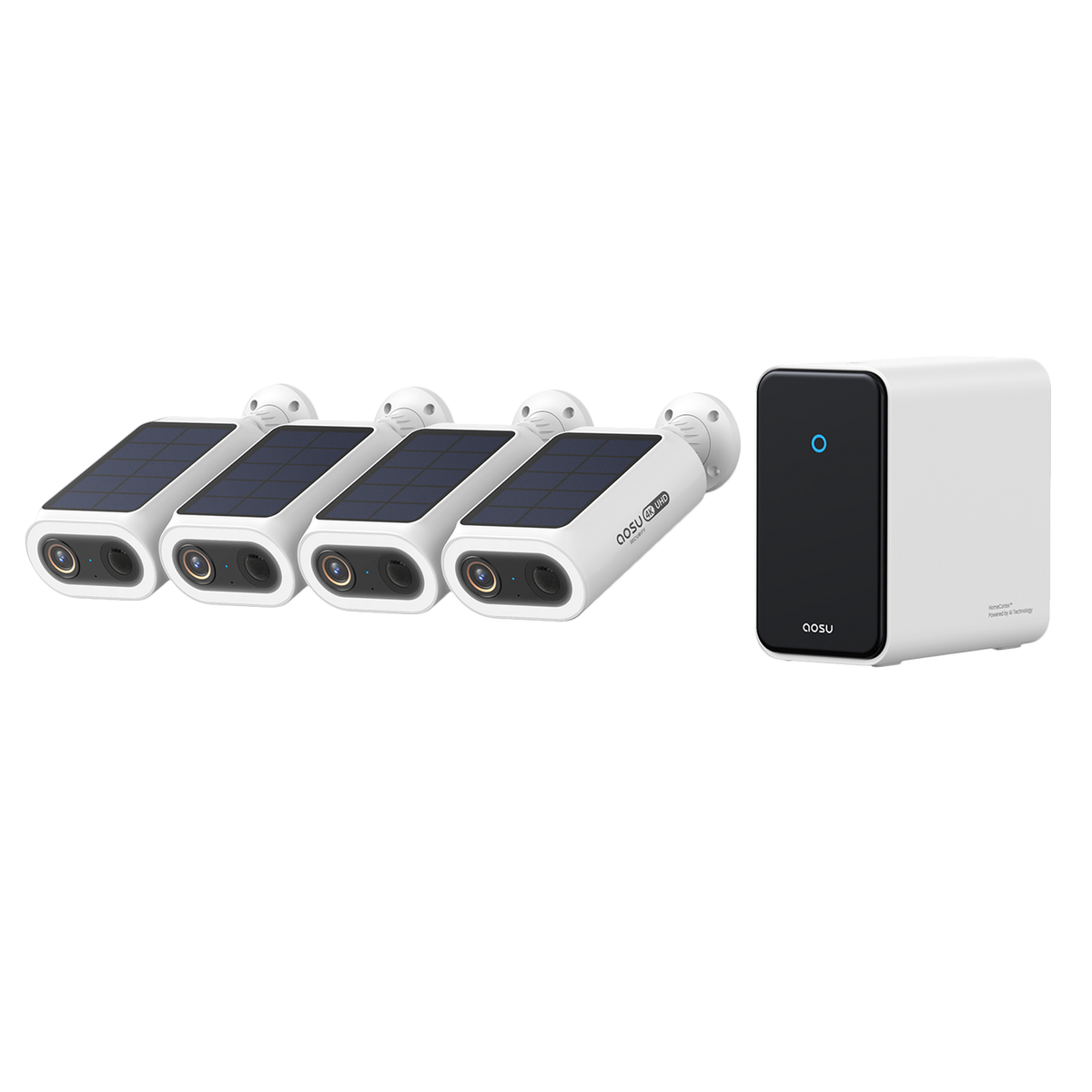


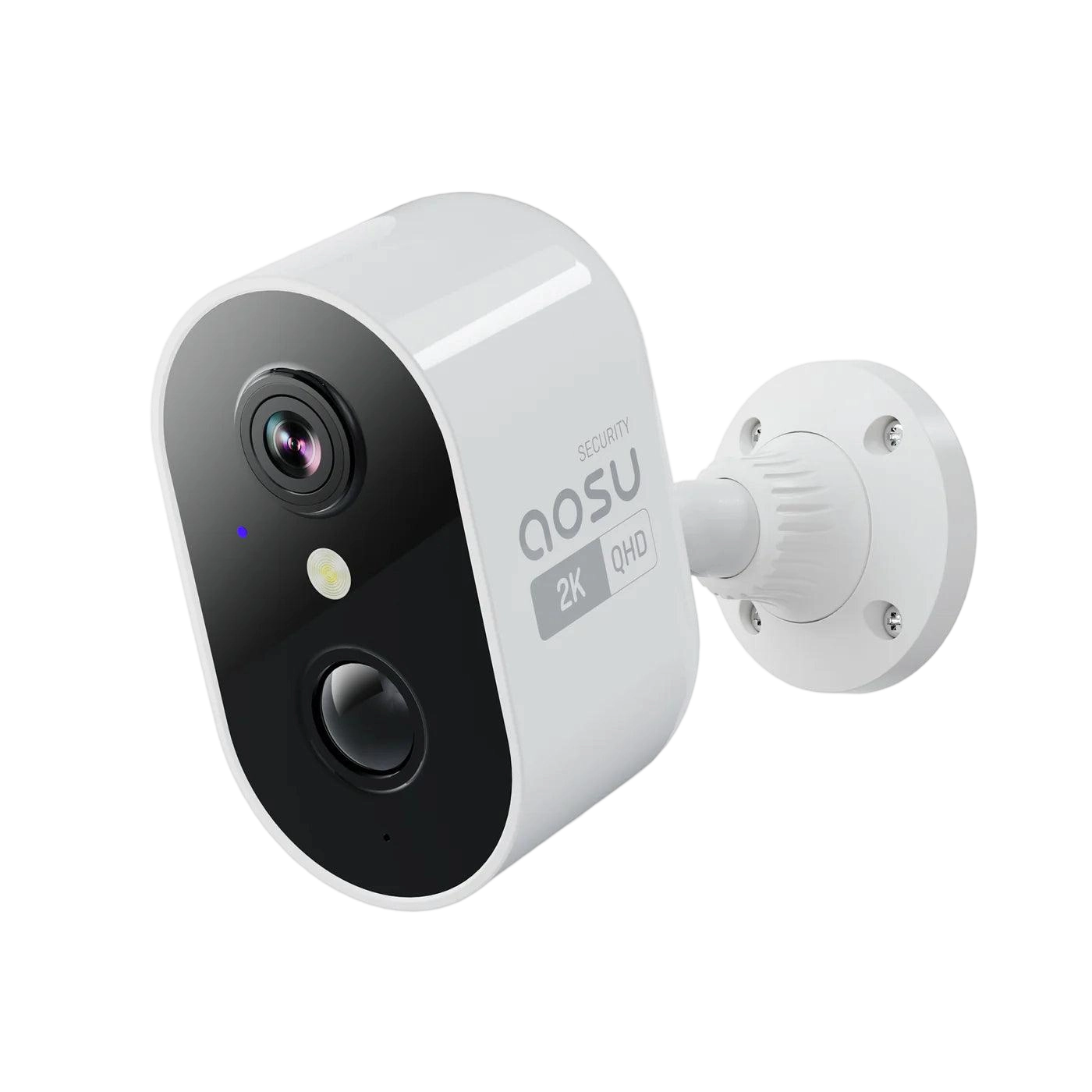
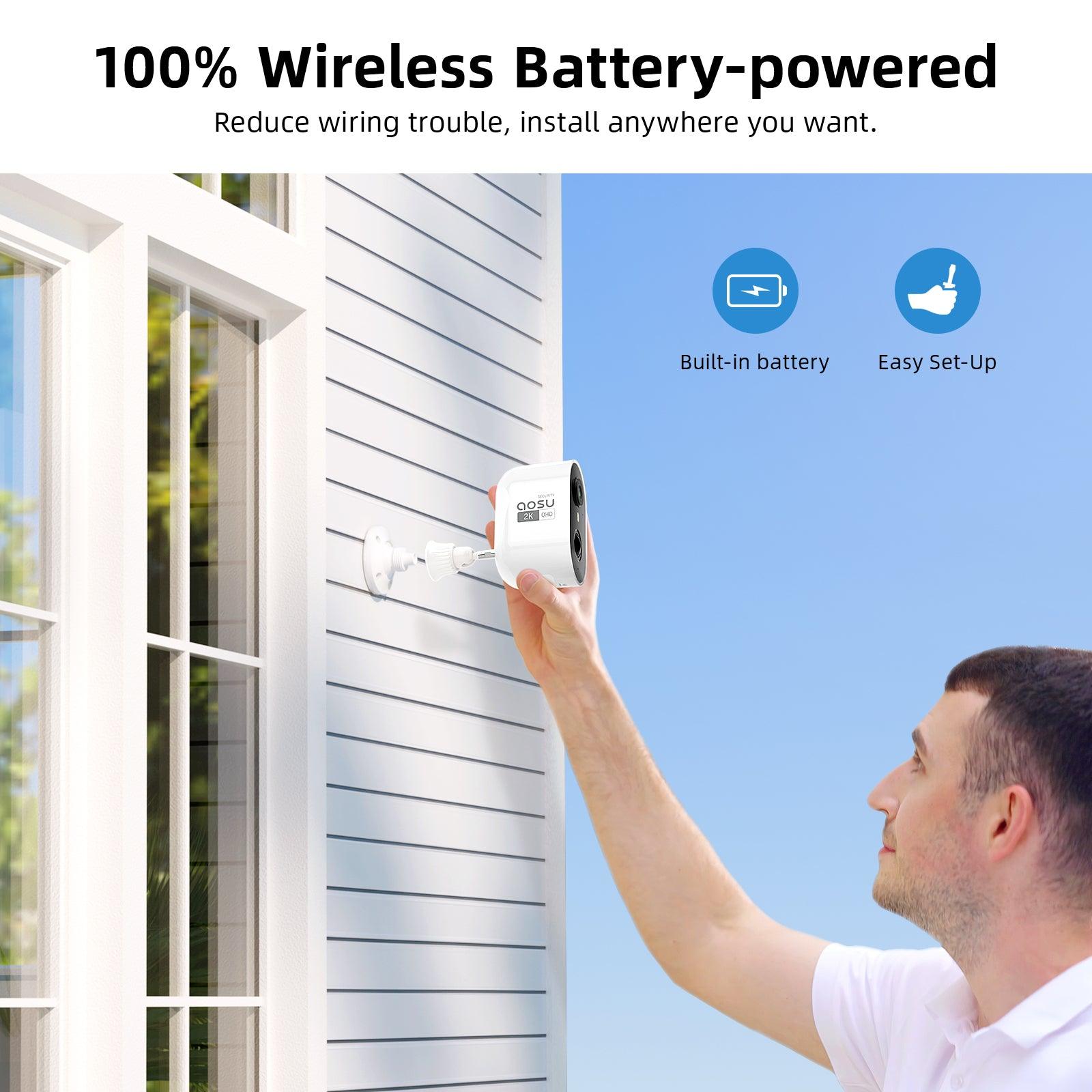
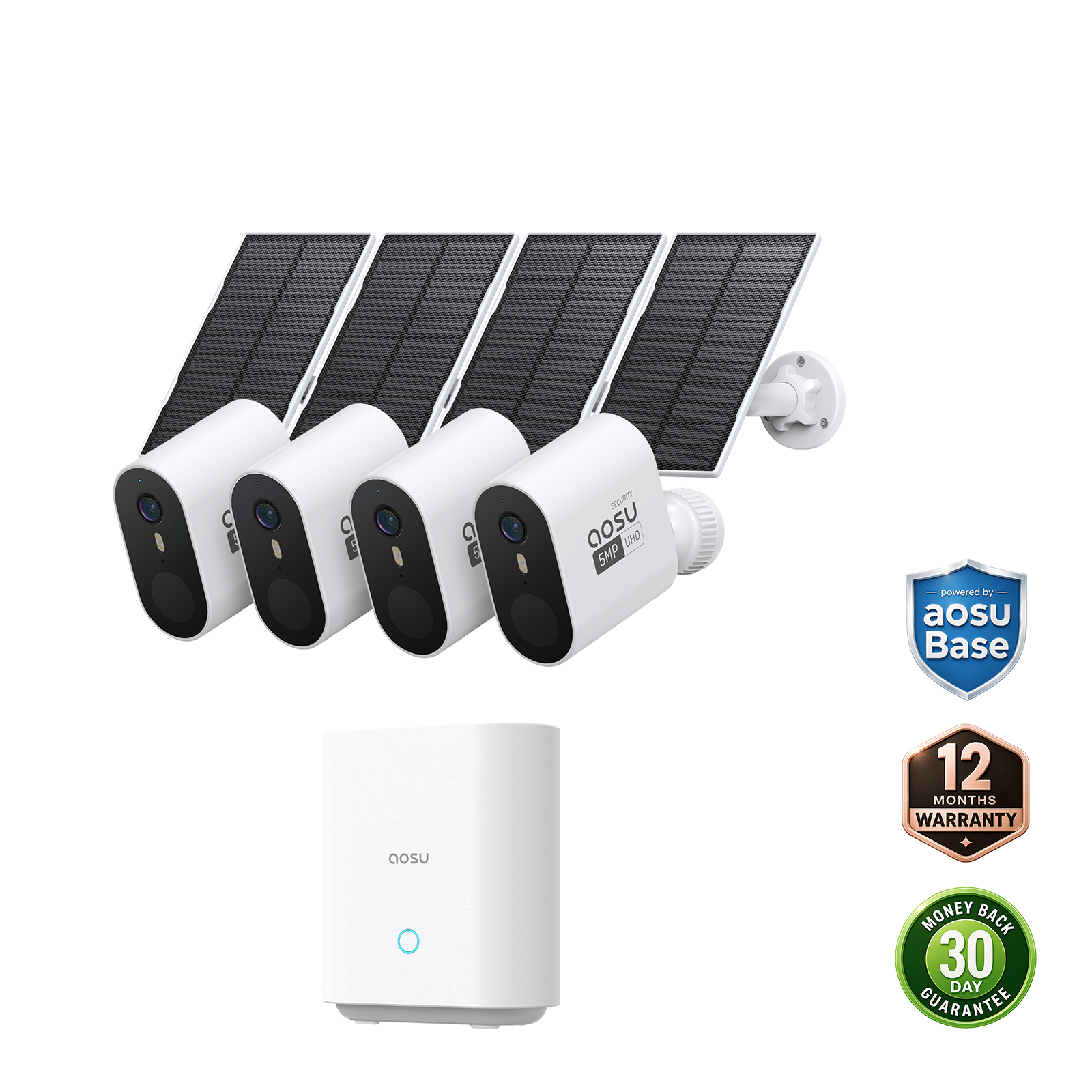
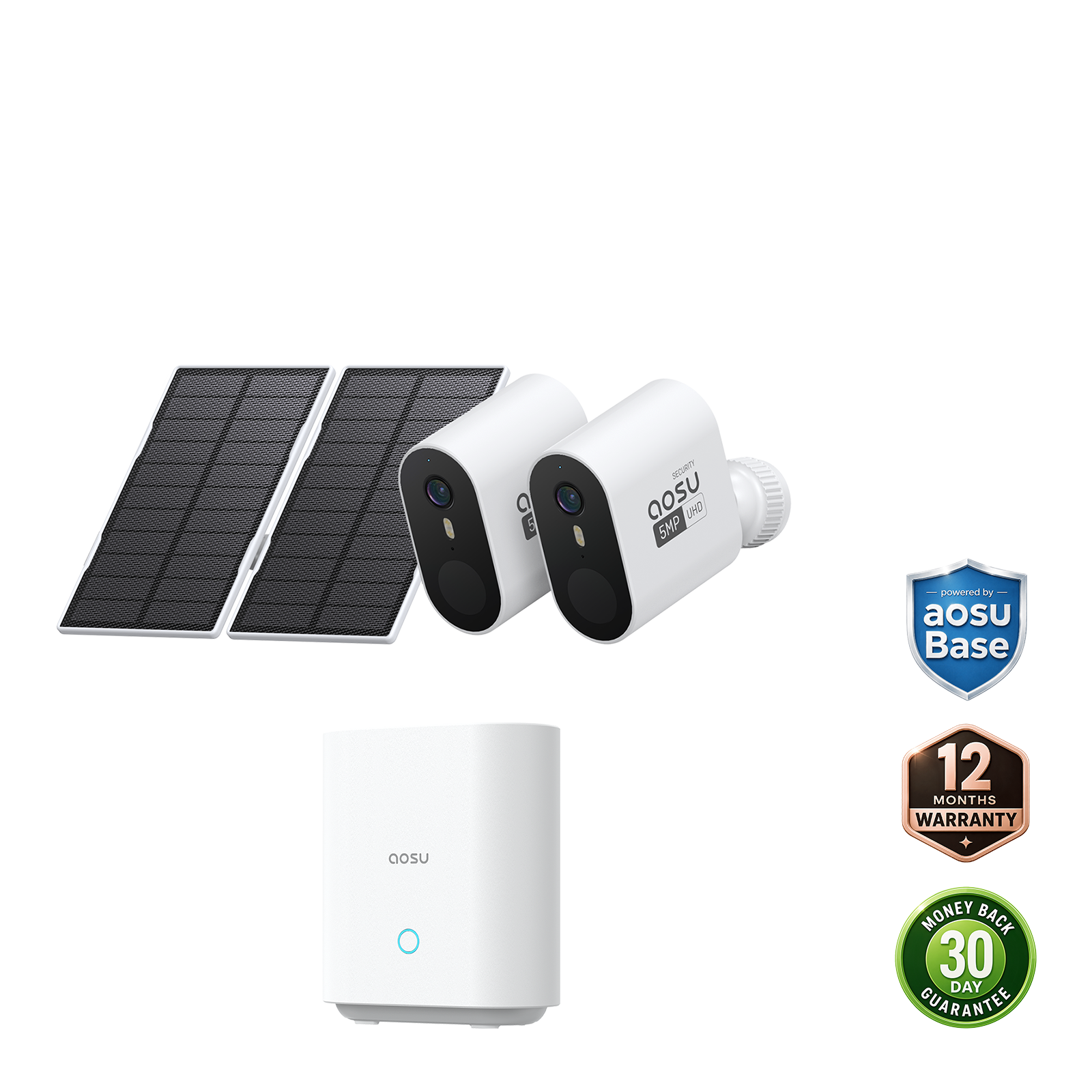
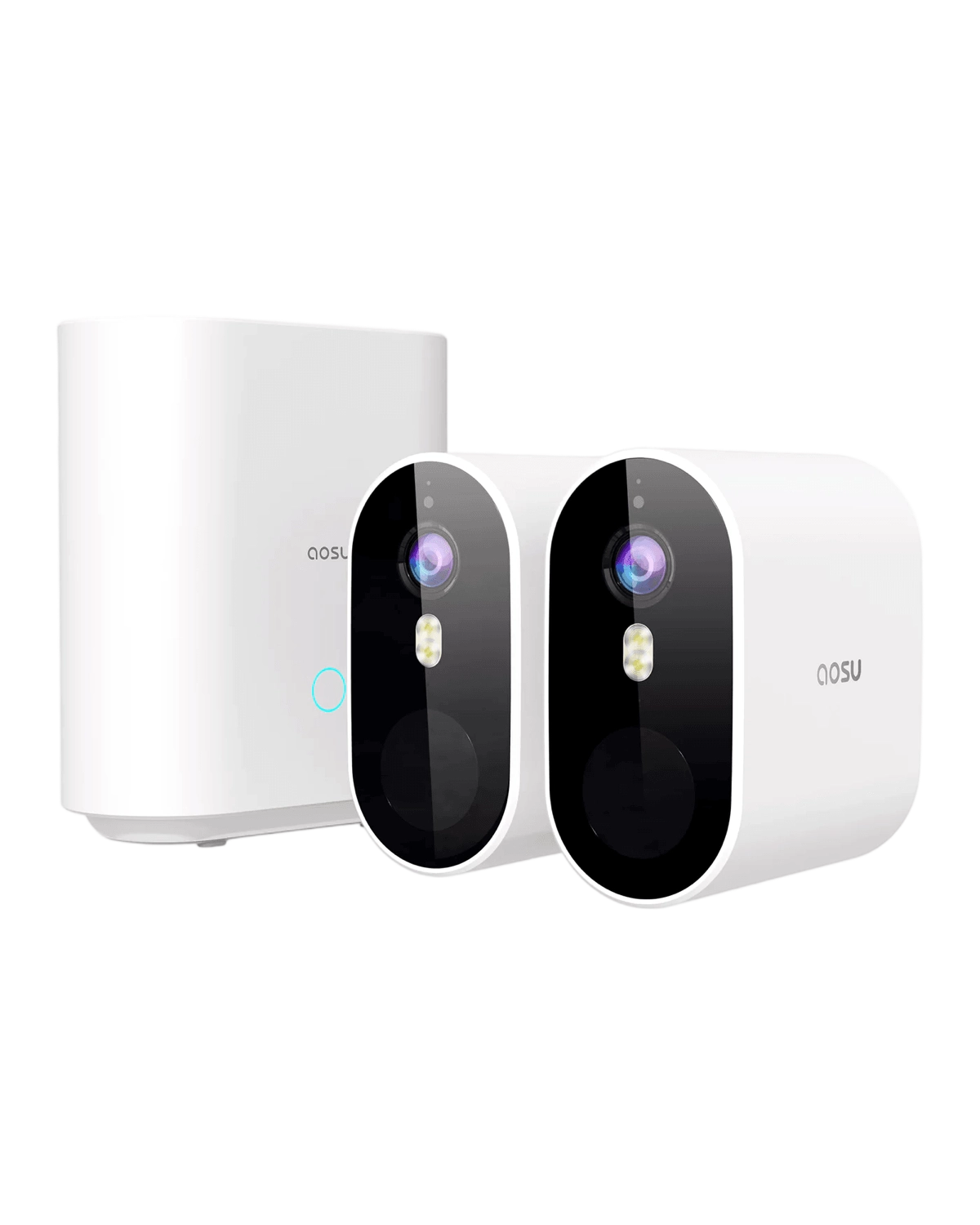
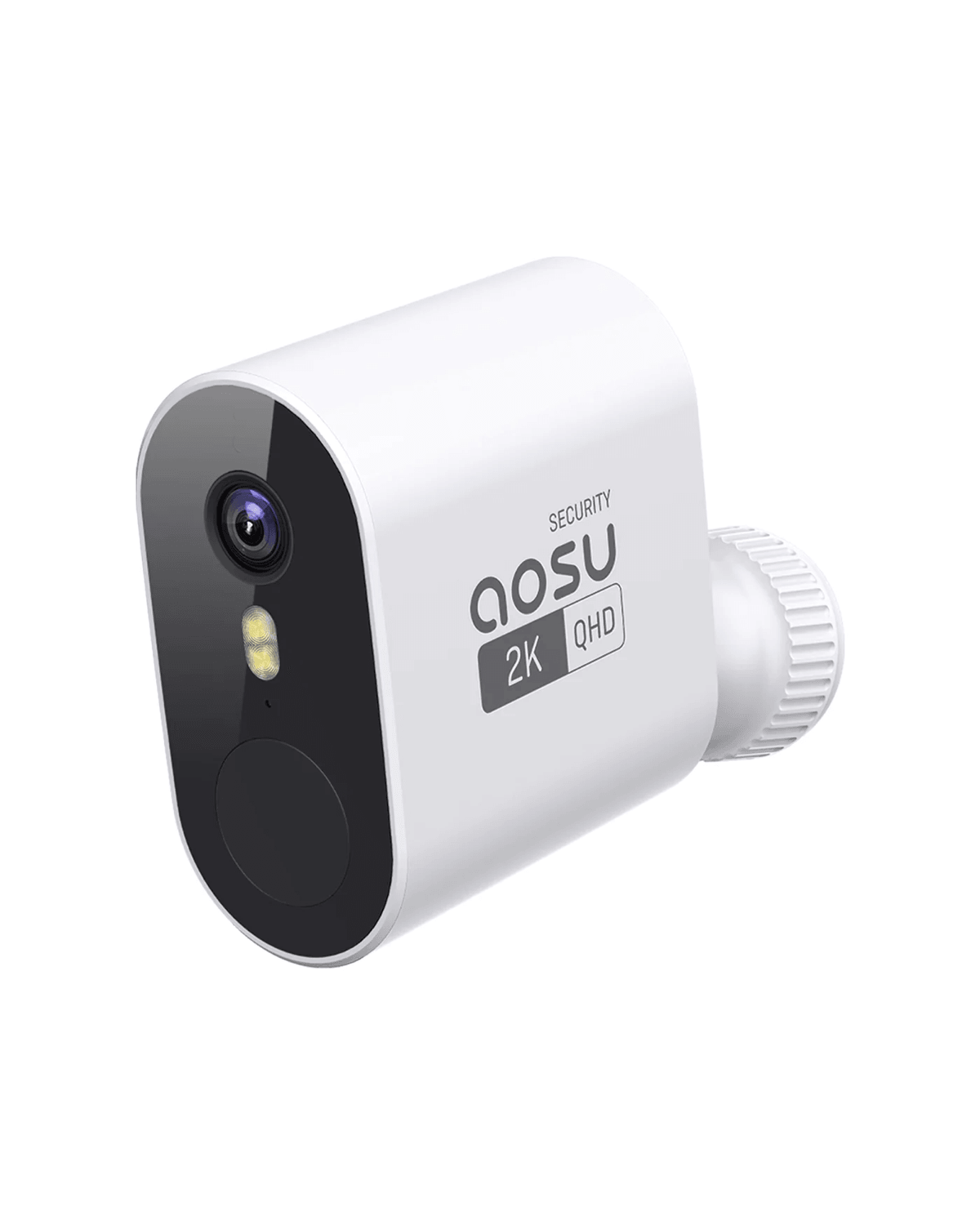


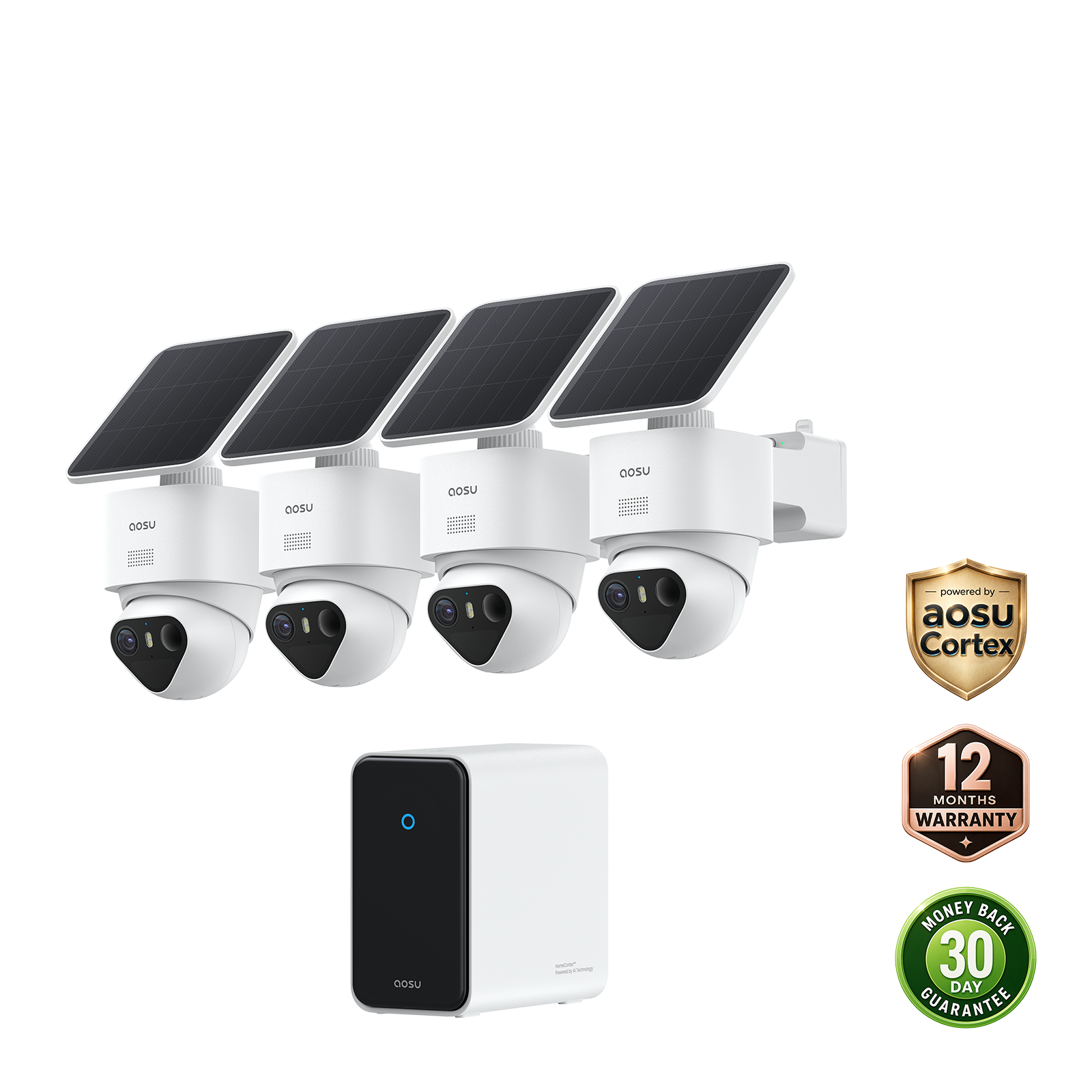
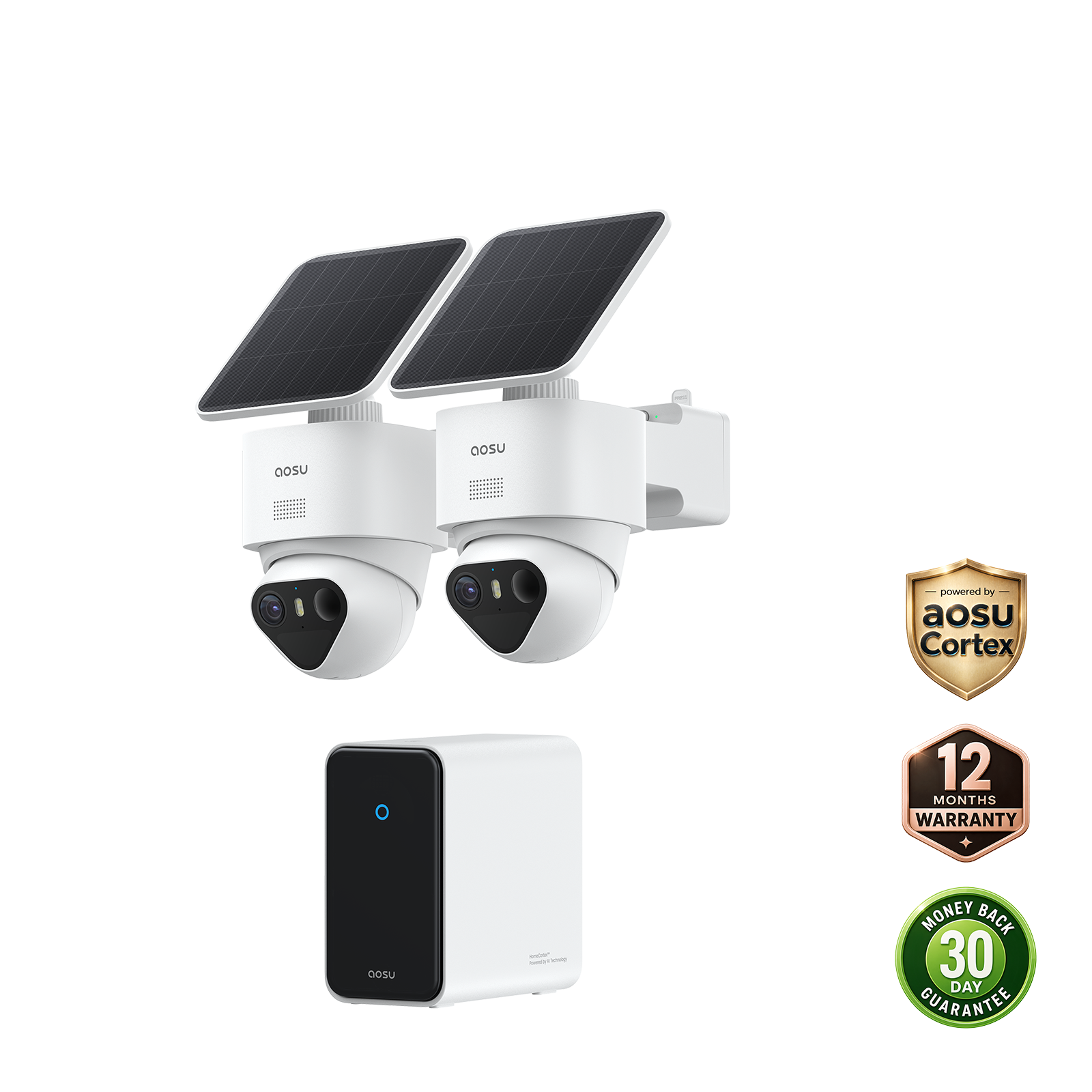

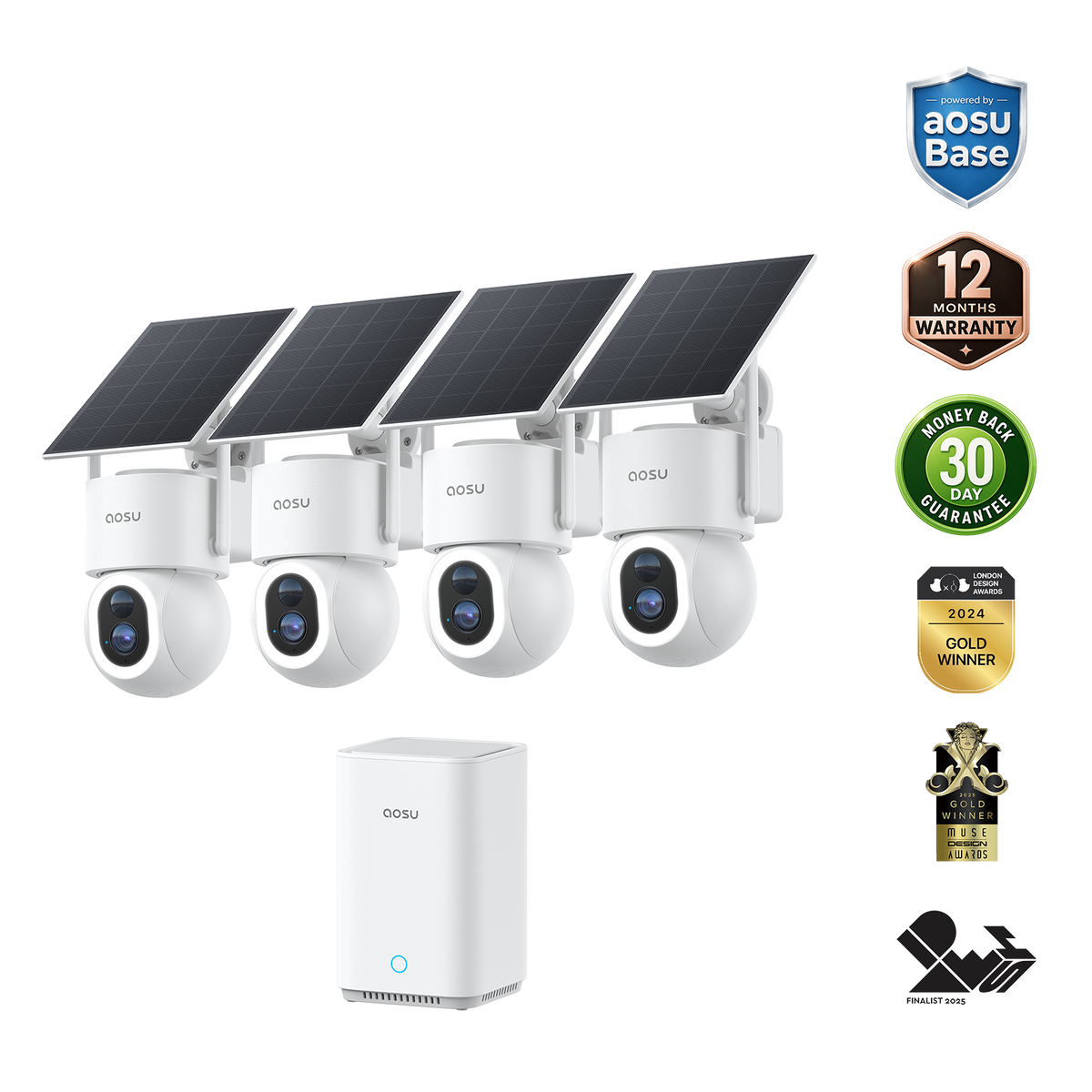





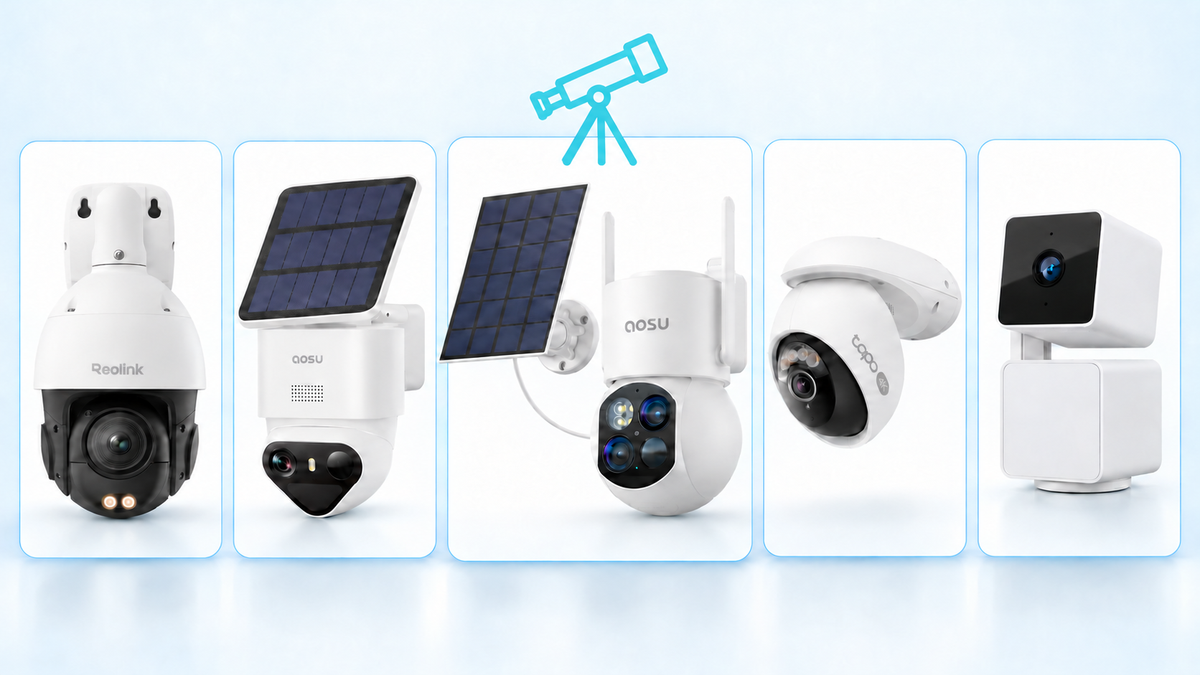
Outdoor cameras have to solve two problems a doorbell or indoor camera never faces: how they stay powered, and how they see in the dark and in bad weather. Everything on this page is built for permanent outdoor mounting, and none of it needs a subscription to record.
The fastest way to narrow the range is to start with power, because that decides where the camera can physically go.
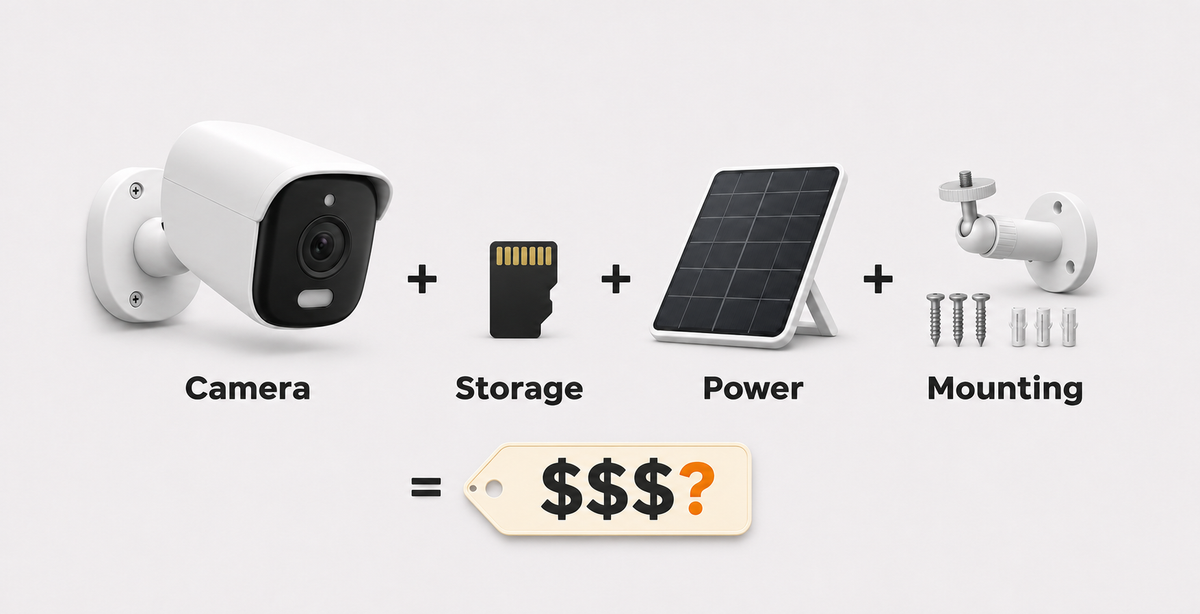
Choose your power type
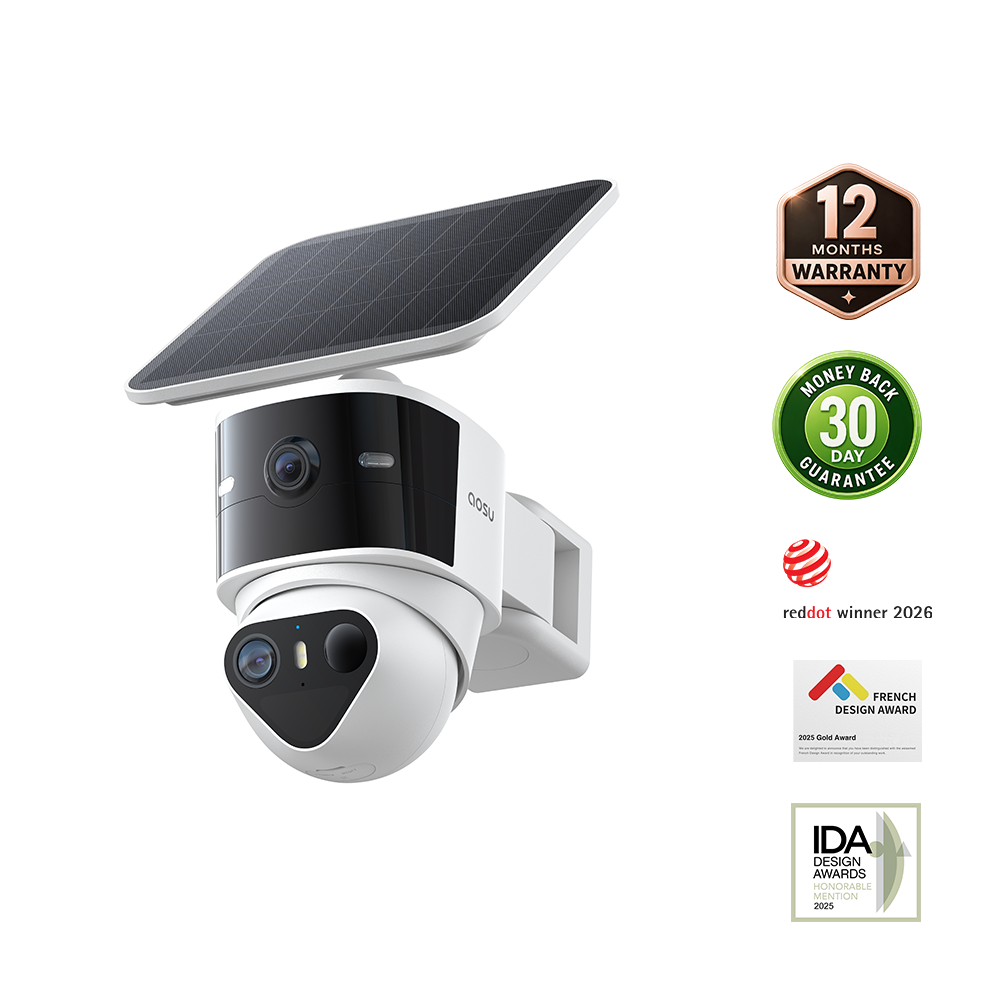
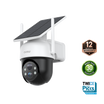
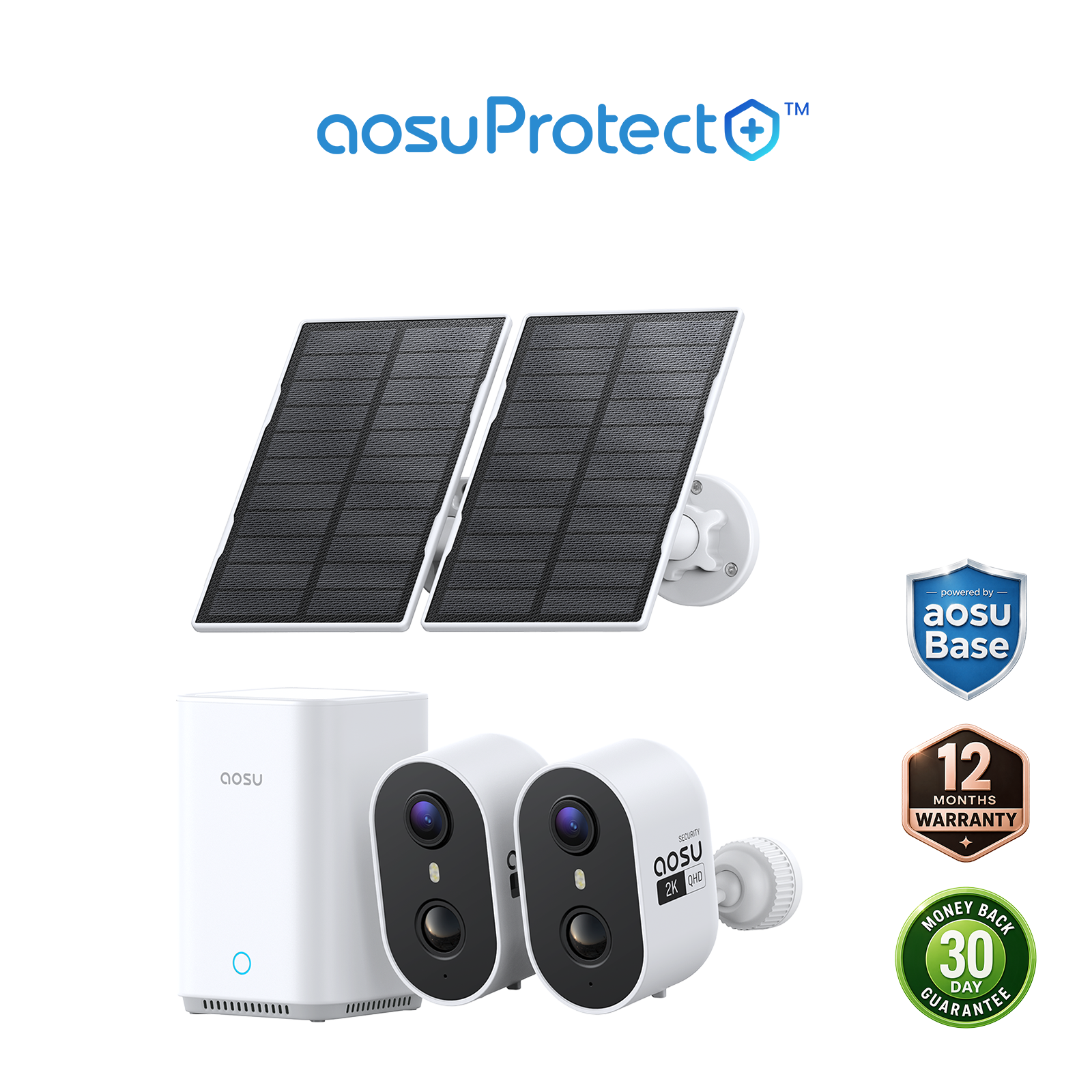
- Solar A built-in panel tops up the battery, so the camera can sit anywhere with open sky and no cable run. The full range is on the solar powered security cameras page; SolarCam D1 Classic and SolarCam P1 Max are the 2K and 4K starting points.
- Battery only No panel, recharged by hand every few months. Best for a covered porch or north wall where a panel would never earn its keep. See battery security cameras.
- Plug-in Continuous power for 24/7 recording rather than event clips. Security Cam D1 SE records 3K around the clock. See wired security cameras.
- Floodlight Camera and lighting in one housing, so the approach is lit before anyone reaches the door. See cameras with lights.
Fixed lens or 360° pan-and-tilt
A fixed lens covers one approach reliably and has nothing to move or wear. A pan-and-tilt camera sweeps a full circle and can follow a person across a yard, which is what you want when a single camera has to stand in for two.
- Fixed — SolarCam Lite, 2K with PIR motion detection, spotlight and siren, IP66 rated.
- 360° pan-and-tilt — SolarCam D1 Classic at 2K, SolarCam D1 SE at 5MP with panoramic PTZ and human auto-tracking.
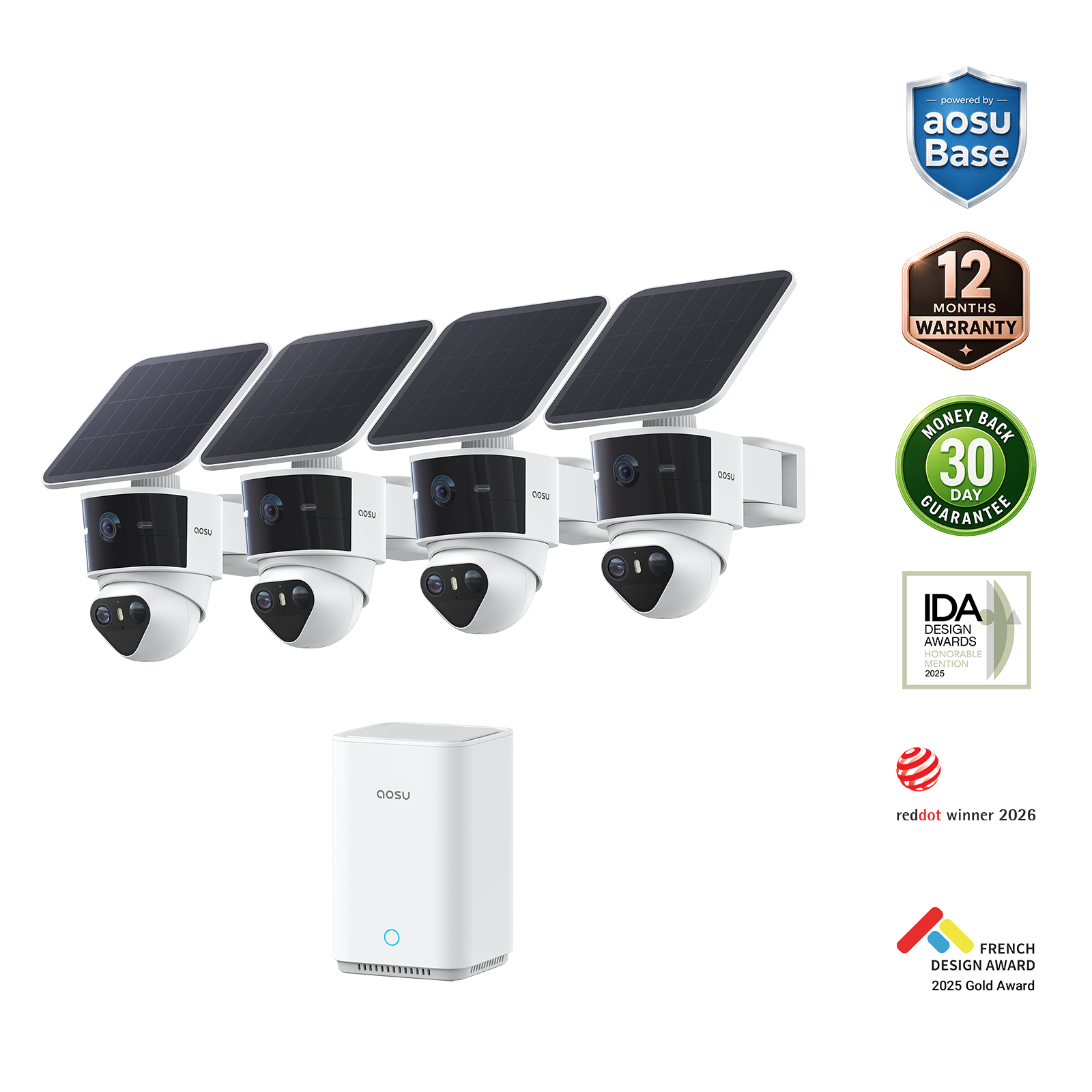
- Dual lens — SolarCam T2 Pro pairs a 170° wide-angle view with a 360° PTZ lens, so you get the whole scene and a tracked close-up at the same time.
Night vision, weather and false alerts
The models above use full-colour night vision rather than black-and-white infrared, which is the difference between "a person was here" and a description you can actually use. Outdoor models such as SolarCam Lite, SolarCam D1 SE and Outdoor Cam D1 Lite are IP66 rated for rain and dust.
On alerts: PIR sensors trigger on heat and movement, so leaves and passing cars set them off. The AI models — SolarCam P1 Max, T2 Pro and the aosuCortex systems — classify what moved before they notify you, which is the single biggest quality-of-life difference between a camera you keep on and one you mute after a week.
Whole-property coverage
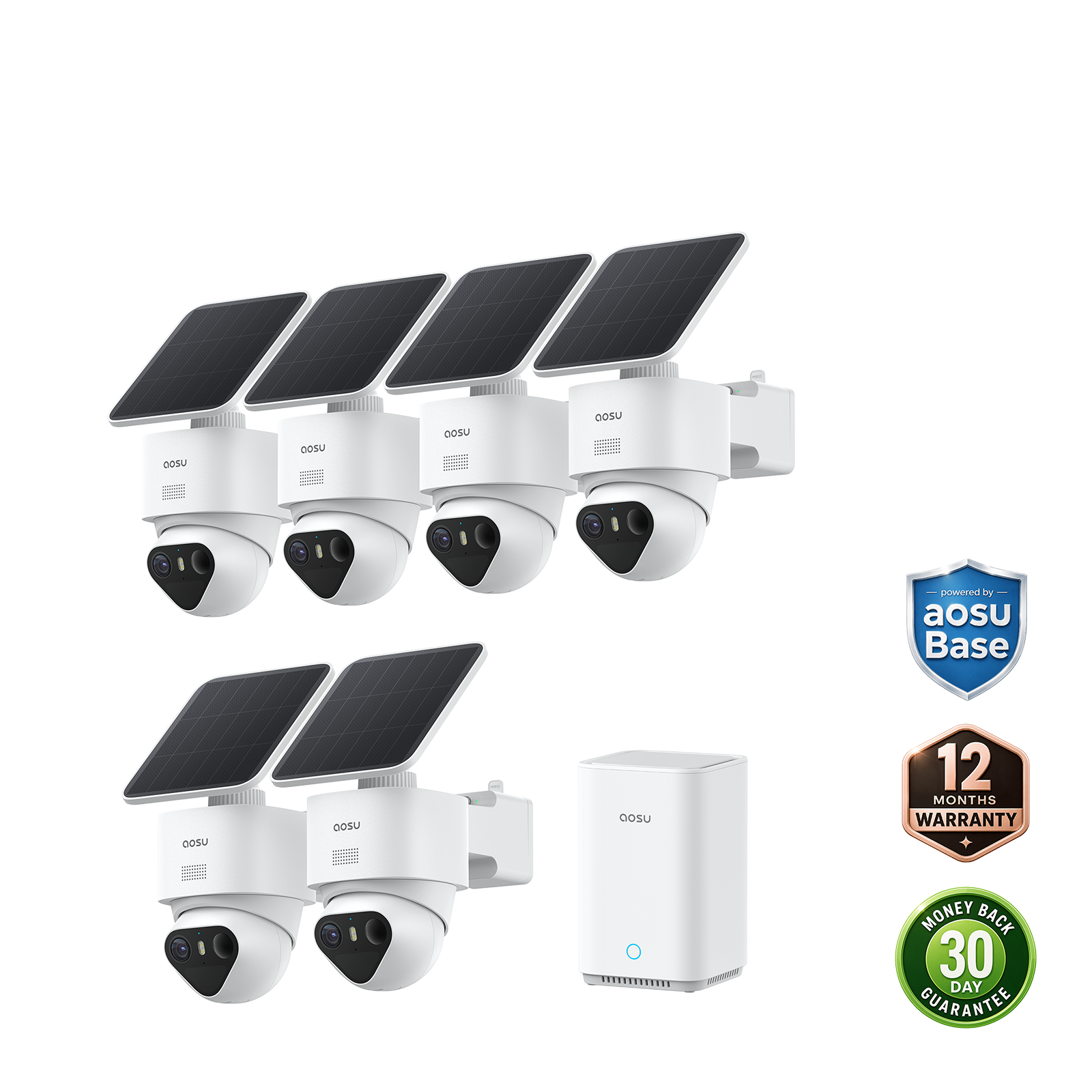
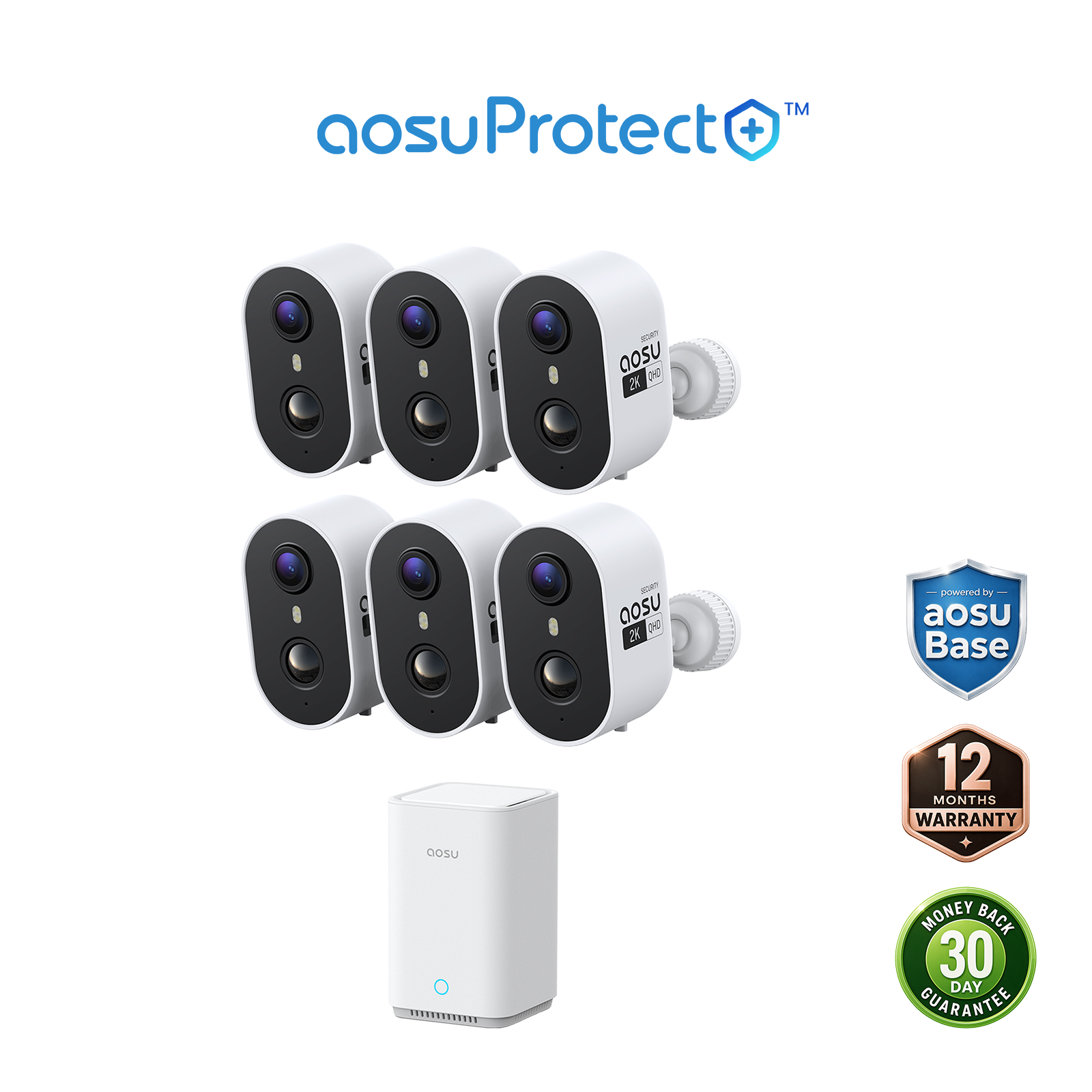
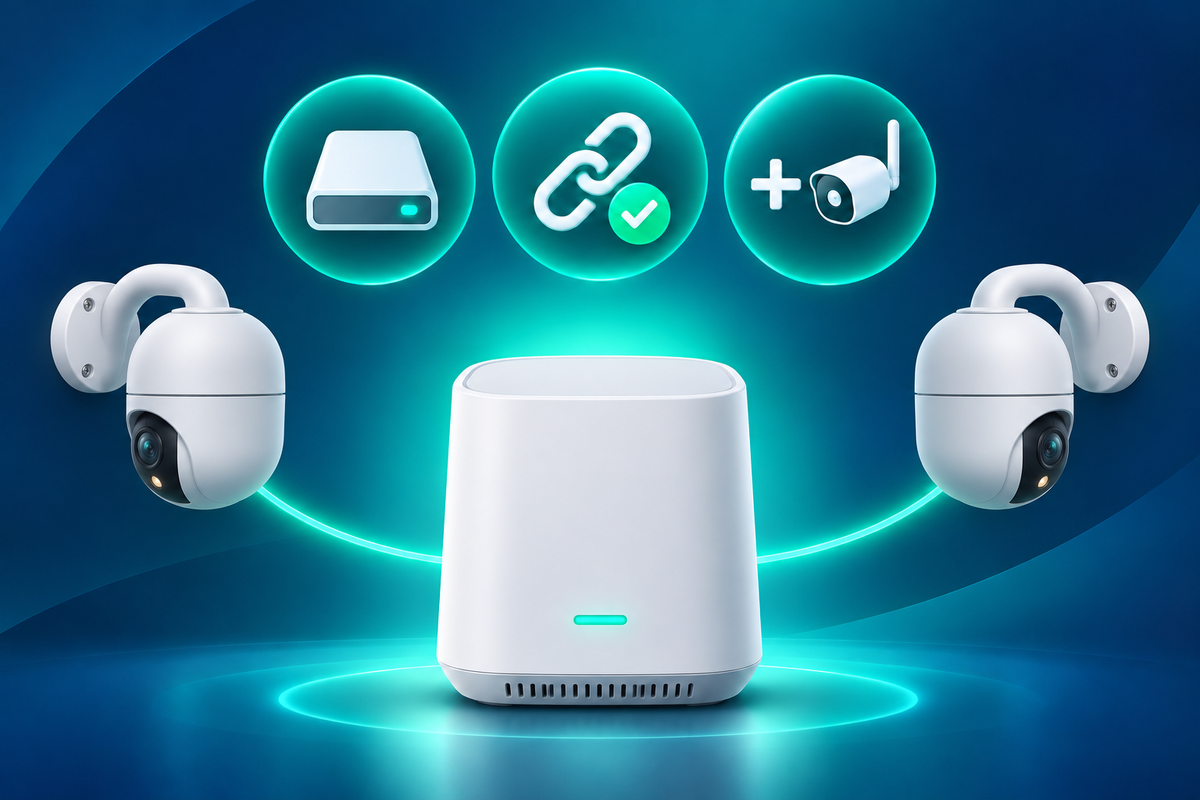
Once you pass three cameras, individual clips stop being useful. The aosuBase and aosuCortex systems keep recordings on a local hub and hand a moving subject between cameras, so one event is one continuous story instead of four disconnected fragments. Those are on the security camera systems page.
Guides and setup reading
- Best outdoor security cameras for 2026 — what to compare before you shortlist
- Home security camera installation guide — mounting height, angle and overlap
- Wired vs wireless security cameras — where each one is genuinely the better answer
- Security cameras without a subscription — what you keep and what you give up
- Night vision cameras for home and outdoor use — colour vs infrared after dark

