



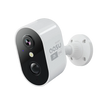
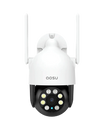
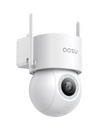
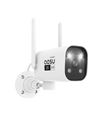


Let’s get two main points covered before we dig in:
First, coverage that’s ‘complete’ on paper can still completely fail to capture vital information when something happens.
Second, it’s usually better to allow some areas to remain uncovered in favor of better coverage for the important spots.
Why Complete Coverage Is Not Always Useful Coverage
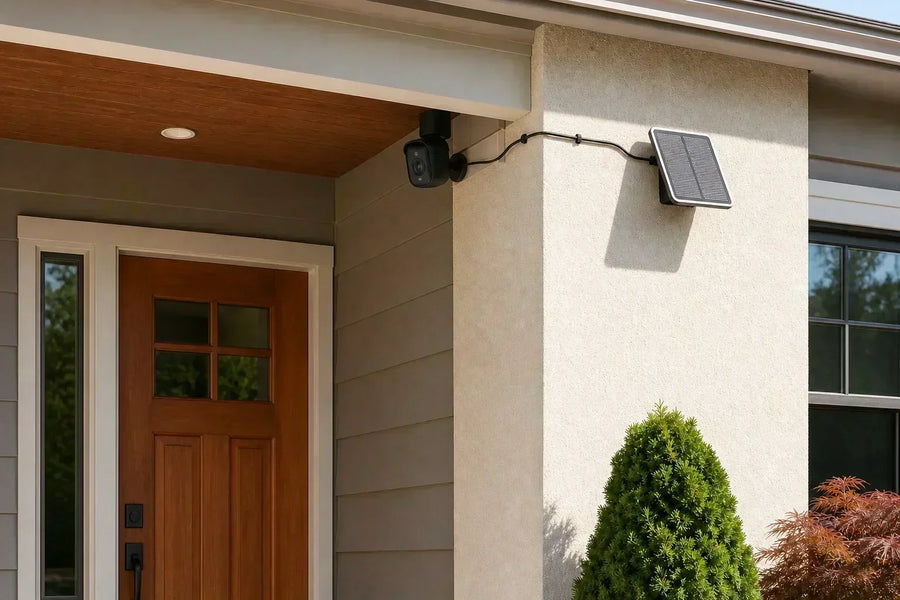
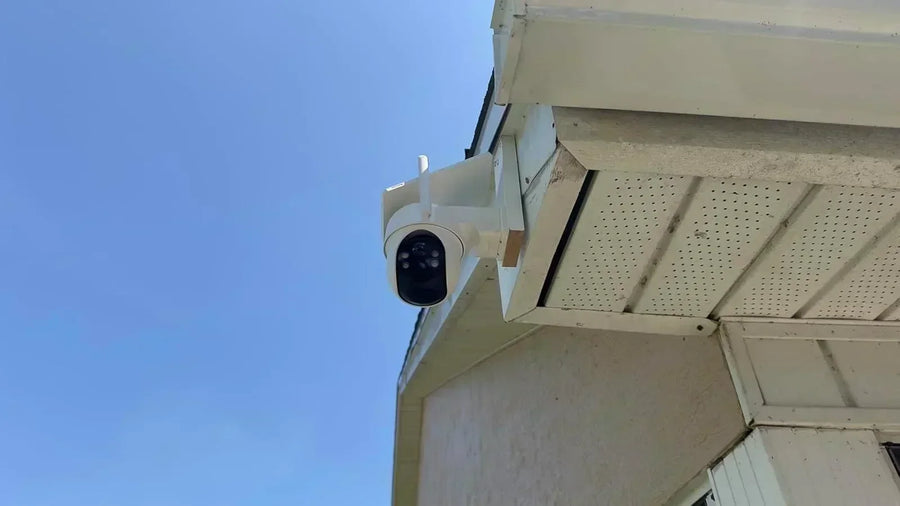
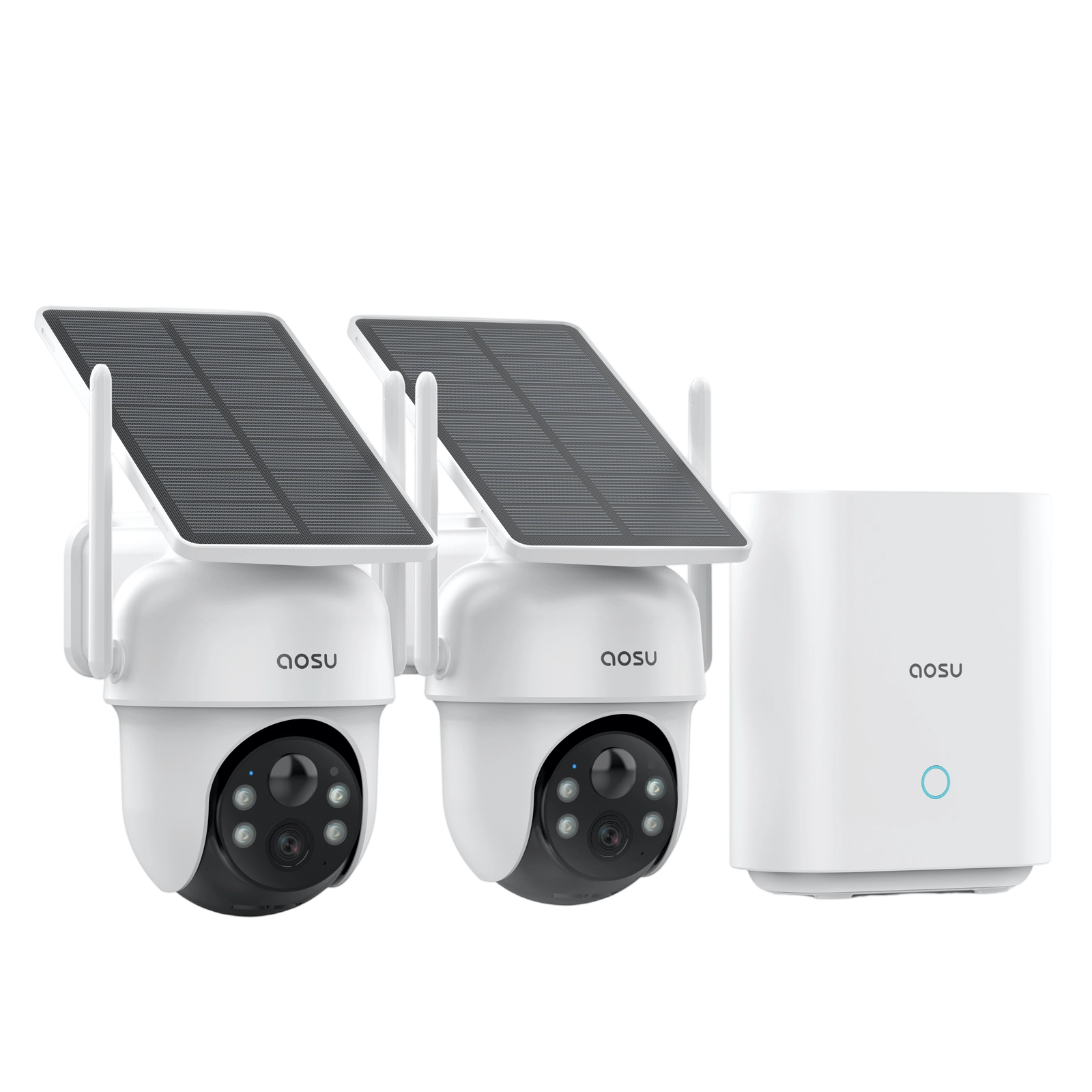
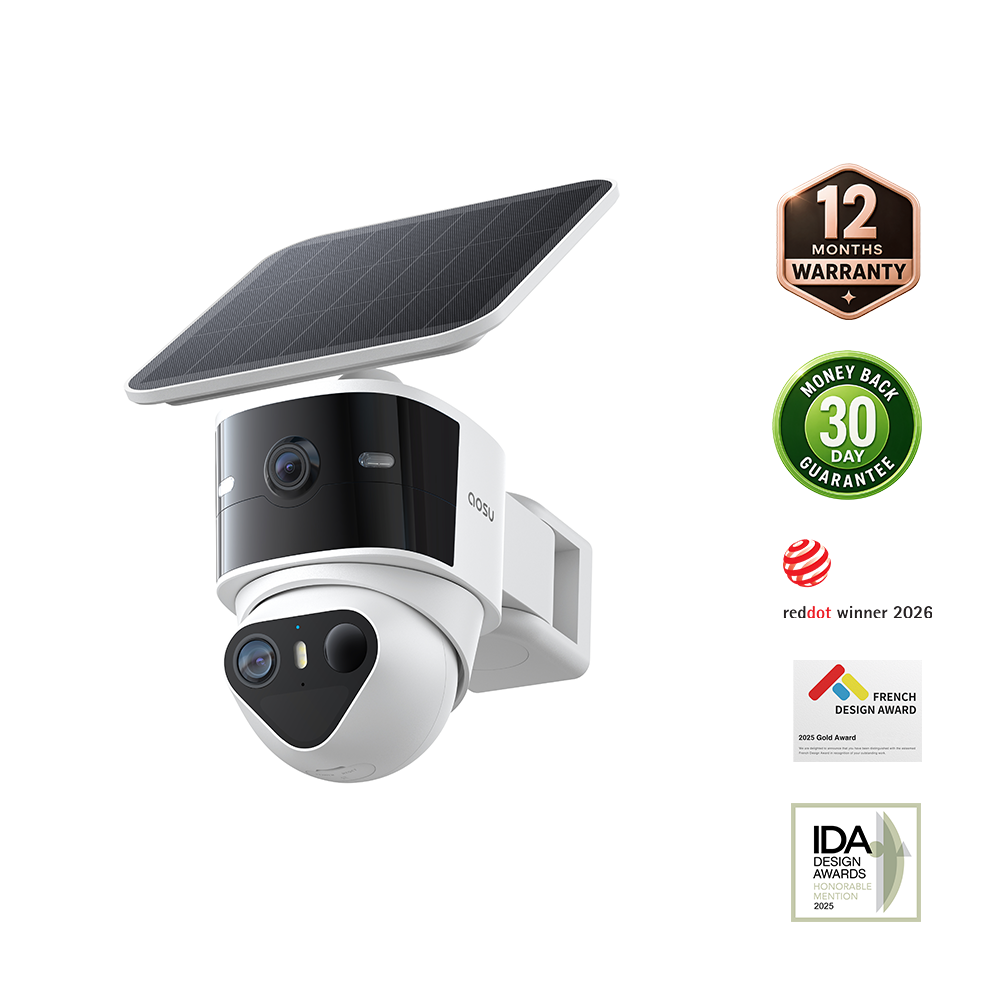
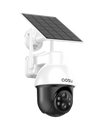
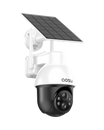
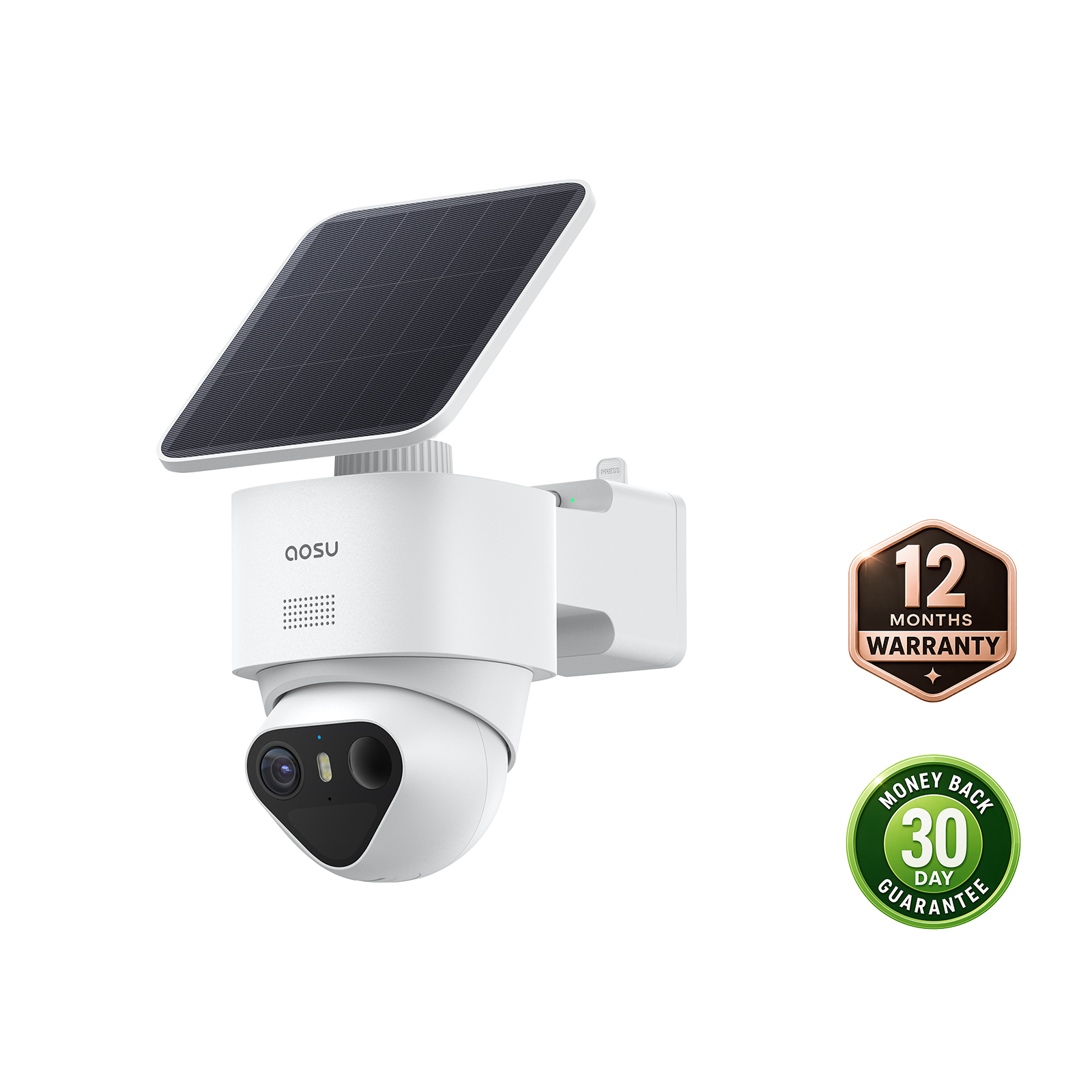
Imagine a perfectly rectangular home with no trees or other obstructions. Two PTZ cameras mounted on opposite corners could technically cover the whole exterior by being able to look all the way down two walls each.
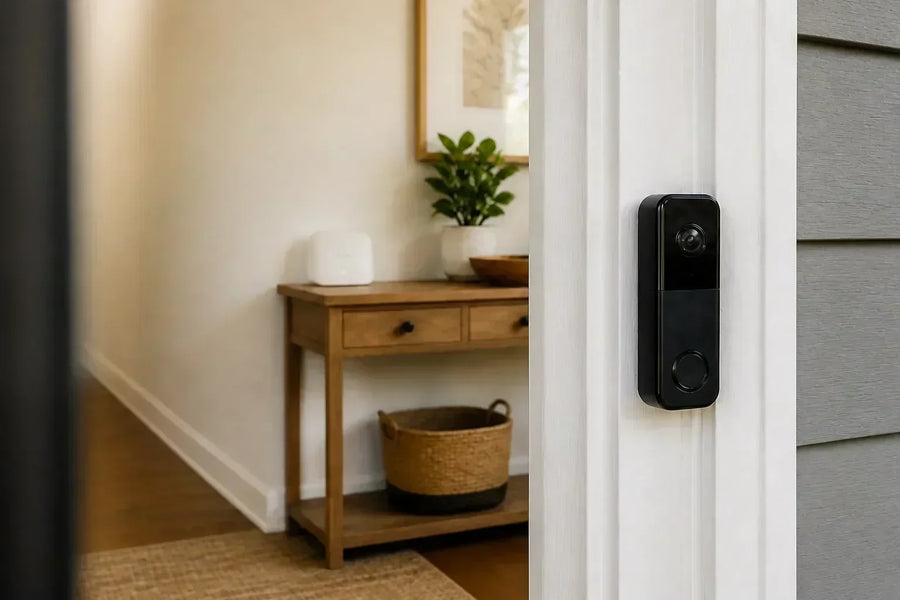
That doesn't necessarily make them the most useful two-camera setup. A camera may be facing the wrong way when something happens. A person at the opposite end of the property may appear too small for useful detail. And most importantly, the front door would likely only be viewable from an awkward angle that doesn’t give much useful info.
Depending on the home, a camera dedicated to the front entrance and another centered on the driveway or rear approach would do a much better job of recording the events the household cares about, despite leaving much more exterior wall uncovered.
This is the difference between theoretical coverage and practical coverage. It’s not only, ‘Can a camera see this area?’ It’s, ‘Will important moments get clearly and reliably captured when they happen?’
 Yellow overlays represent areas within the PTZ cameras total viewing range. Blue overlays represent a current viewing angle.
Four Tests for Every Important Area
So how do we avoid blind spots in important areas? Apply these four tests to each place that needs reliable monitoring.
| 1. Is the event visible? | 2. Is it clear enough? | 3. Will it be recorded? | 4. Is there unacceptable downtime? |
|---|---|---|---|
|
|
|
|
Where Blind Spots Matter Most
There is no universal rule that every front door matters more than every side gate. Rank locations by what happens there and whether they lead toward something important.
-
Vital moments
Start with the places where important activity happens: a person reaches a door, a gate opens, a vehicle enters, or a package is left. These areas usually deserve the clearest and most reliable views.
-
Approach and exit routes
Context can matter as much as the single moment at the door. Consider covering important routes in and out of your property.
-
Separate coverage for important areas
If you need reliable coverage of both your front porch and driveway, it’s best not to rely on a single moving lens that can only watch one at a time.
-
Property-specific concerns
Prioritize a shed when it contains something important. Prioritize a gate, basement entrance, or window if you have a specific concern about entry through it.
How to Set Up Security Cameras Without Important Blind Spots
-
List the moments you want recorded
Write specific events instead of broad areas: a visitor at the front door, a package on the porch, someone opening the side gate, or a vehicle entering the driveway.
-
Trace how activity reaches those moments
Sketch the doors, gates, paths, driveway, stairs, fences, and usual parking positions. Add arrows showing how a person or vehicle approaches and leaves.
-
Place the vital moment near the center
Do not spend the best part of the frame on an empty lawn or wall while the doorway sits at the edge. Choose an angle and distance that focuses on the main subject.
-
Check normal obstructions
Park vehicles in their spots, put trash cans, grills, and other large objects where they usually go, then open and close doors and gates while you check the view.
-
Test real recordings through a full day and night
Walk the routes, leave a package, approach in both directions, and review the saved clips. Check darkness, glare, infrared reflections, shadows, motion detection, and subject size.
-
Use the simplest effective fix
Adjust detection settings, re-aim, or change the PTZ resting position first. Then consider changing install position or removing an obstruction. Add another camera if you find an important blind spot cannot be solved by adjustment.

Is It Okay to Have Blind Spots Around Your House?
Yes. For most homes, it’s totally acceptable to have some uncovered areas. It’s best to fit your coverage to your own circumstances and goals.
Privacy, cost, maintenance, Wi-Fi, power, and alert volume are also valid limits. A smaller system that reliably records the important moments is more useful than a larger system filled with low-quality cameras that are frequently offline or simply create alerts that no one reviews.
| Often doesn’t need coverage | Likely worth fixing |
|---|---|
|
|
Read why visible footage may still lack useful detail
To Wrap Up
A perfectly filled coverage map is not the goal. Remember how the two PTZ cameras on our imaginary rectangular home could create weak detail, missed timing, and important views that disappear when the lenses turn?
Set up security cameras around vital views first, then the routes that give important context. If important events are visible, clear, recorded, and covered when they happen, a few low-value gaps around the rest of the property can be perfectly reasonable.
FAQs About Security Camera Blind Spots
Can security cameras completely eliminate blind spots?
It may be possible to make every exterior area visible with enough cameras and suitable placement, but complete visibility does not guarantee useful footage. Distance, obstructions, lighting, motion detection, viewing angle, and PTZ direction can still create practical blind spots.
Is it okay to have security camera blind spots around a house?
Yes, when the uncovered area contains no important entrance, route, asset, or recurring concern and cannot lead to something important without crossing another reliable camera view. Prioritize useful coverage over recording every square foot.
Where should security cameras overlap?
Overlap is most useful at important entrances, transitions between routes, and areas where an obstruction or moving camera could otherwise remove the only useful view. Complete double coverage around an ordinary home is usually unnecessary.
Does a PTZ camera have blind spots?
A PTZ camera can have a wide movement range, but the lens points in one direction at a time. Areas outside the current view may be missed unless detection and tracking turn the camera in time or another fixed view preserves the scene.