













The Short Answer
Yes, security footage can make someone appear larger, wider or differently proportioned. The effect depends on camera position, subject distance, image location and how the picture is processed or displayed.
Close-up perspective and stretching near a wide-angle image’s edges are different effects. Neither provides a reliable measure of your actual body size. Compare several positions and frames before drawing conclusions from one image.
Why Security Cameras Can Change How You Look
Security cameras are built to capture useful information, not flattering portraits. They often need to cover as much area as possible from one fixed position, so they use a wide field of view.
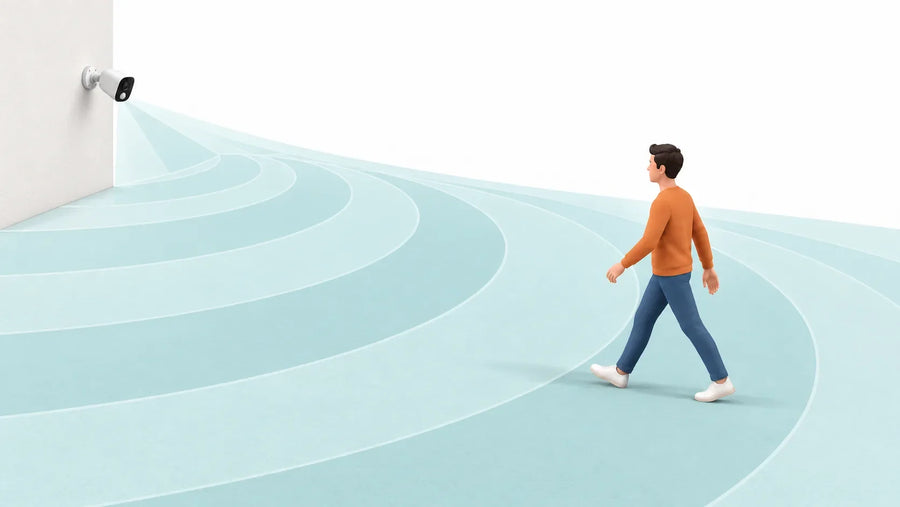
That wide field of view changes how space gets squeezed into a flat image. Things near the lens can look larger. Things near the edge can stretch. Straight lines can bow. A person walking across the frame can look totally normal in one spot and a little cartoonish in another.
None of this means the footage is fake. It just means the camera is doing security-camera things.

The biggest culprits are distance, angle, and wide-angle stretching near the edge of the frame.
The Real Science Behind the Weirdness
-
Camera position controls perspective
Parts of a person closer to the camera appear larger relative to parts farther away. A hand or face close to a doorbell can therefore look disproportionately prominent. Moving the camera or subject changes this relationship.
-
A wider view does not automatically change perspective
Changing focal length from the same viewpoint changes framing, rather than the underlying distance relationships. Wide-angle cameras often show exaggerated close-up proportions because they are used near people and include a large surrounding scene.
-
Edges introduce a separate effect
A wide field of view projected onto a flat image can stretch people near the sides or corners. Lens distortion and digital correction may also change shapes. Edge stretching and curved straight lines should not be treated as the same phenomenon.
-
Camera height changes proportions
A camera mounted high and tilted down can make your head, shoulders, or upper body look more dominant. A low camera can do the opposite and make legs, feet, or anything close to the lens look larger.
-
Low light can make outlines harder to interpret
Longer exposures can blur movement, while gain, noise reduction and compression may obscure fine detail. Shadows and clothing can further affect the visible outline. These effects do not consistently make everyone wider; they make a single frame less dependable for judging proportions.
Compare a stationary daytime recording with a nighttime recording from the same position before attributing the difference to body shape.
When Are You Most Likely to Look Bigger on Security Footage?
| You are close to the camera | You are near the edge | The camera is mounted high | The clip is dark or blurry |
|---|---|---|---|
|
|
|
|
Does a Security Camera Add 10 Pounds?
Not in any consistent, scientific way. The old idea that a camera adds 10 pounds is more of a pop-culture shortcut than a rule.
A security camera can make you look bigger in one frame and smaller in another. It depends on where you are, how close you are, what lens the camera uses, how the camera is mounted, and whether the image has been corrected or compressed.
So the better question is not, "Does this camera make everyone look bigger?" It is, "Where in this camera view do shapes get distorted?"
How to Reality Check Your Camera
Use the same camera, person and posture. Review the original recordings without stretching the player window or changing its aspect ratio.
| Comparison | Keep consistent | What to examine |
|---|---|---|
| Center versus edge | Similar distance, posture and lighting | Changes associated with image position |
| Near versus farther away | Camera position and person centered | Changes in the relative size of nearer and farther body parts |
| Day versus night | Position, clothing and posture | Lost detail, shadows and blurred outlines |
| Correction off versus on, if supported | Same scene and viewing size | Cropping and shape changes introduced by processing |
Save the comparison frames with their settings. Do not use digital zoom or a wider display stretch to make the pictures match. A phone photo can provide another viewpoint, but it is also affected by distance, lens choice and processing.
Can You Make Security Footage Look More Normal?
A security camera does not need to be flattering, but you can reduce the weirdness if footage quality matters.
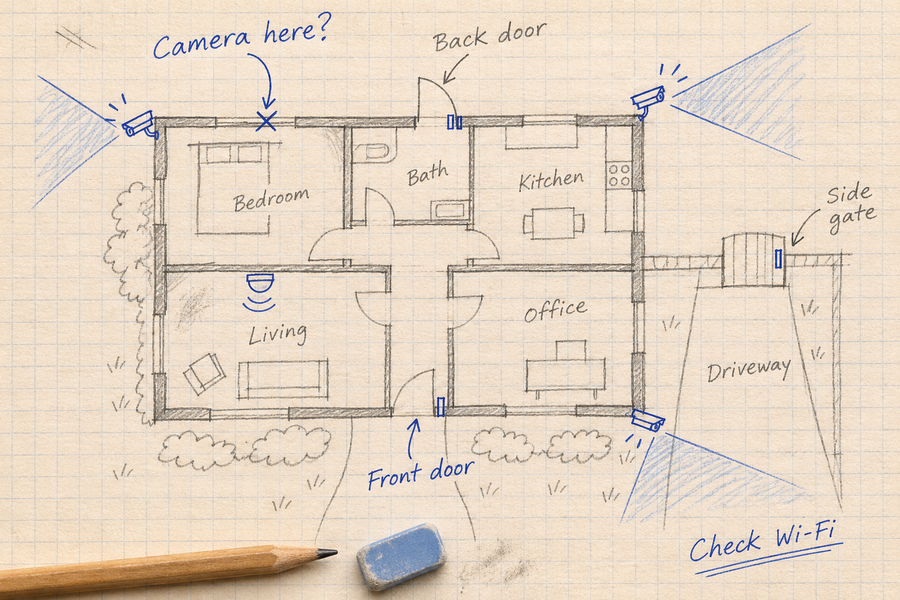
Try mounting the camera where the important area is near the center of the frame. Avoid relying on the extreme edges for people, faces, or body shape. If the camera has lens distortion correction, test whether it helps or makes the sides look stretched in a different way.
For entry areas, a little more distance often helps. A camera that is too close to the subject may capture useful evidence, but it can also make everyone look like they are arriving through a fishbowl.

Common Myths About Security Camera Footage
-
Myth: The camera always makes people look bigger
Nope. It can make people look bigger, smaller, wider, shorter, or stretched depending on position and angle.
-
Myth: Wide-angle distortion means the camera is bad
Not necessarily. Wide-angle coverage is useful for security. The tradeoff is that the footage may not look portrait-perfect.
-
Myth: The footage is useless if it looks distorted
Distorted footage can still be useful for confirming motion, timing, direction, clothing, vehicles, and events. Just be careful judging exact body size from it.
-
Myth: Night vision footage is useless
Night vision can add blur, noise, harsh contrast, or softened edges. However, it can often catch enough important details to identify what happened and even who was seen.
To Wrap Up
Security footage can change apparent proportions, especially at close range or near the edges of a wide view. Start by comparing position, distance, lighting and playback shape before deciding that the camera is faulty.
If you are comparing equipment, review the selected camera’s field of view, mounting requirements and sample footage. A new camera should be chosen for useful coverage and detail, rather than a promise of a more flattering appearance.
For help separating viewing problems from saved-video quality, see what to check when camera footage looks blurry in the app.
FAQs About Wide-Angle Camera Distortion
Why do I look bigger on security camera footage?
You may look bigger because you are close to a wide-angle lens, near the edge of the frame, or filmed from a high or low angle. Those factors can exaggerate proportions.
Do wide-angle security cameras make people look wider?
They can, especially near the edges of the frame. Wide-angle lenses capture more area, but that can stretch or warp shapes depending on lens design and image correction.
Does a doorbell camera make your face look bigger?
Often, yes. Doorbell cameras are usually close to the person and use a wide-angle lens, so faces, hands, shoulders, or packages near the lens can look larger than normal.
Can security camera footage be used to judge someone's exact size?
Be careful. Security footage can show movement, location, clothing, and events, but exact body size can be distorted by lens angle, distance, lighting, and compression.