


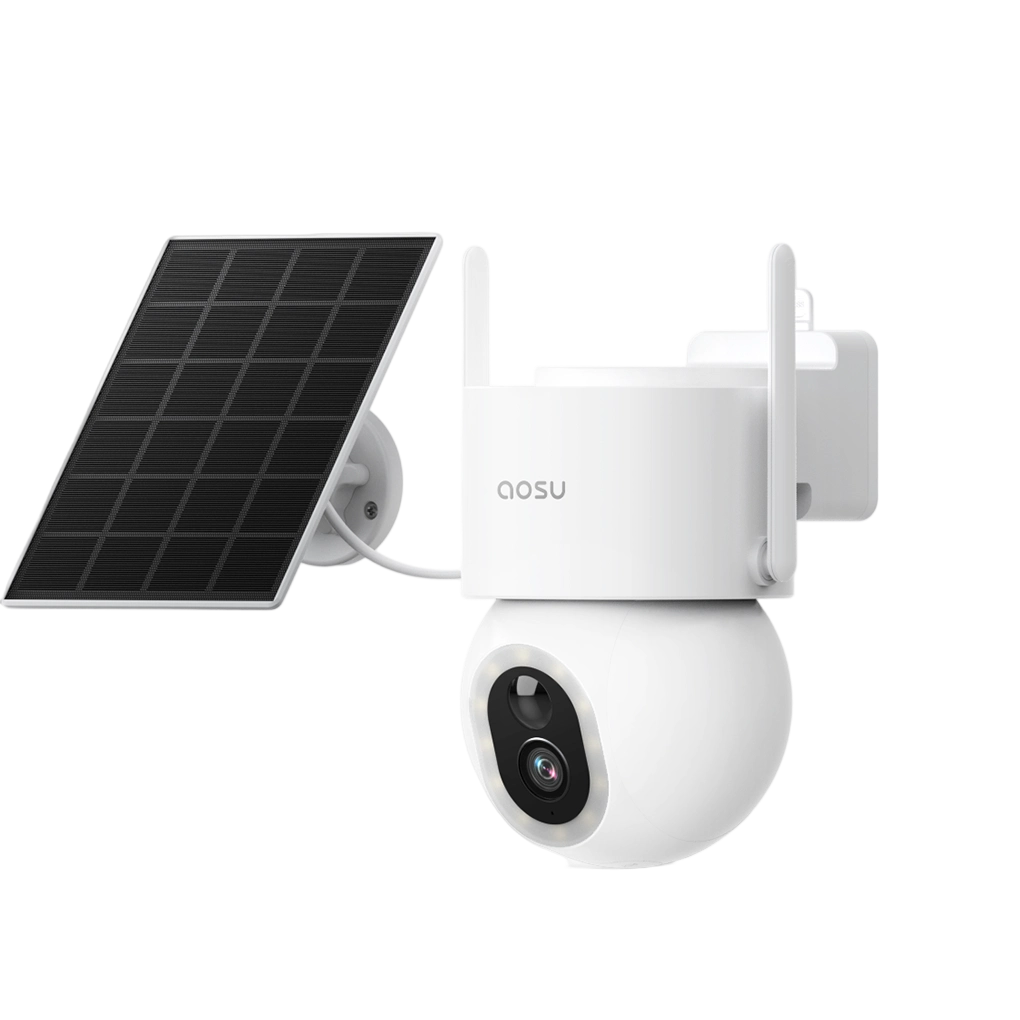
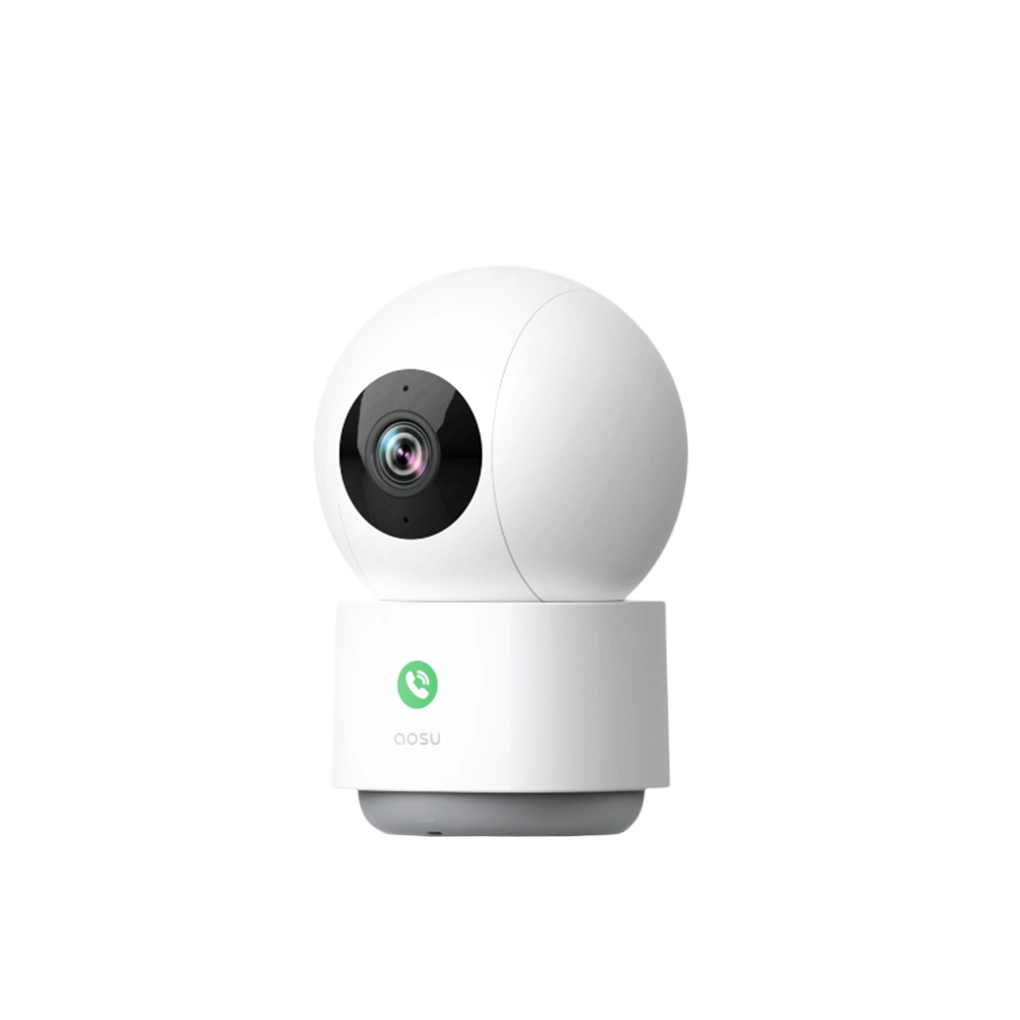




When comparing optical zoom vs digital zoom for outdoor security cameras, an 8x label only tells you the picture can be made bigger. It does not tell you whether the camera captures more distant detail or simply stretches the detail it already has.
Here is an easy way to picture optical, digital, telephoto-assisted, and hybrid zoom before getting into the specifications and buying trade-offs.
The Simplest Way to Picture Camera Zoom
Imagine photographing someone standing at the far end of your driveway. Optical zoom is like using a camera with a large, adjustable photography zoom lens: you zoom the lens in before taking the picture. Digital zoom is like taking the photo first and then pinching the screen to make the person bigger. A fixed telephoto lens is like looking through a simple telescope with one set level of magnification: it gives you a closer, narrower view, but it cannot smoothly move between wide and close. Hybrid zoom starts with the closer view from a zoom or telephoto lens, then may enlarge it further like a phone photo.
If you remember one thing, make it this: an optical zoom lens can adjust how close the view is, while a fixed telephoto lens always starts with one closer view. Digital zoom only enlarges what was already captured, and hybrid zoom uses some combination of these methods. The technical sections below explain how much those differences matter in practice.

Optical zoom adjusts the lens before capture. Digital zoom enlarges an existing image. A fixed telephoto view starts closer, while hybrid zoom combines a closer optical or telephoto view with digital enlargement.
What Optical Zoom Actually Does
Optical zoom changes focal length inside the lens. At the wide end, the camera sees more of the yard or driveway. At the telephoto end, it sees a narrower area and makes a distant subject larger on the sensor.
That is why optical zoom is useful when one camera must inspect subjects at several distances. A motorized optical zoom camera can begin with a wider view, then adjust toward a gate, parked vehicle, or far end of a driveway without relying entirely on a crop of the wide image.
However, optical zoom does not guarantee a clear face or readable plate. Focus accuracy, sensor quality, exposure, subject movement, lighting, mounting angle, weather, and video compression still matter. Zooming in also reduces the amount of surrounding context in the frame. On a PTZ camera, the lens may be able to pan and tilt as well as zoom, but PTZ movement and optical zoom are separate capabilities.
An optical zoom ratio describes the longest focal length divided by the shortest. A 4x ratio does not tell you the starting field of view, sensor resolution, or how large a person will appear from your mounting point. Two 4x cameras can therefore provide very different results.
What Digital Zoom Can and Cannot Do
A digital zoom security camera enlarges a selected part of an existing image. Imagine taking a photo, trimming away the edges, and stretching what remains to fill the screen. The subject looks bigger, but the camera has not collected new visual information.
That does not make digital zoom useless. It can work well when the source image is sharp, the lighting is good, and the subject already occupies enough pixels. It is convenient for checking clothing color, the direction someone moved, or an object left near the porch.
The limitation becomes obvious when the subject is very small in the original frame. Enlarging the area also enlarges blur, noise, compression blocks, and focus errors. Edge enhancement or AI processing may make the image look cleaner, but it should not be treated as proof that fine detail was captured accurately.
Digital zoom can happen during live view, during recording, or later in playback. For a buying comparison, check whether the saved clip retains the full-resolution frame and lets you inspect it later, or whether the camera saves only an already enlarged view.
What Telephoto-Assisted Zoom Means
Telephoto-assisted zoom is a useful descriptive term, not a universal technical standard. It describes systems that use a dedicated fixed telephoto lens as a closer starting view, then may apply digital enlargement for additional reach.
A telephoto lens captures a narrower field of view than a wide lens. If both sensors and resolutions are otherwise comparable, a distant person or vehicle can occupy more pixels in the telephoto frame than in the wide frame. That is genuine optical framing from the telephoto lens, not merely a crop taken from the wide image.
But a fixed telephoto lens is not the same as a conventional optical zoom lens. Its focal length does not move continuously from wide to telephoto. A dual-lens camera may show both views at once, switch between them, or use one for context and the other for tracking, depending on the model.
This arrangement is especially useful when the important distant zone is predictable. A wide view can preserve the driveway or yard, while the telephoto view concentrates detail around a gate, curb, parked vehicle, or outer property line.
Why Hybrid Zoom Needs a Closer Look
A hybrid zoom security camera generally uses more than one imaging method to create its close-up view. One product may combine a motorized optical zoom lens with digital enlargement. Another may combine separate wide and telephoto cameras with a digital crop. A third may add multi-frame or AI-assisted processing.
Those systems should not be assumed to perform equally just because they advertise the same hybrid zoom ratio. If the manufacturer does not explain the method, treat the advertised number as a viewing-control specification rather than a guarantee of identification detail.
1. Does any lens physically change focal length?: This separates conventional optical zoom from fixed-lens systems.
2. Is there a native telephoto feed?: A separate telephoto sensor can begin with more distant detail than a crop from the wide feed.
3. Where does digital enlargement begin?: Ask which parts of the quoted range use native optical framing and which parts crop or upscale.
4. How are the views presented?: The app may show both feeds simultaneously, switch between them, or use different views for tracking and playback.
5. What does the quoted ratio include?: Confirm whether it is optical, digital, or the total combined range.
6. Can you inspect realistic samples?: Unedited day and night footage at the intended distance is more useful than a multiplier alone.
How SolarCam T2 Fits Into the Comparison
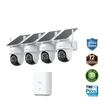
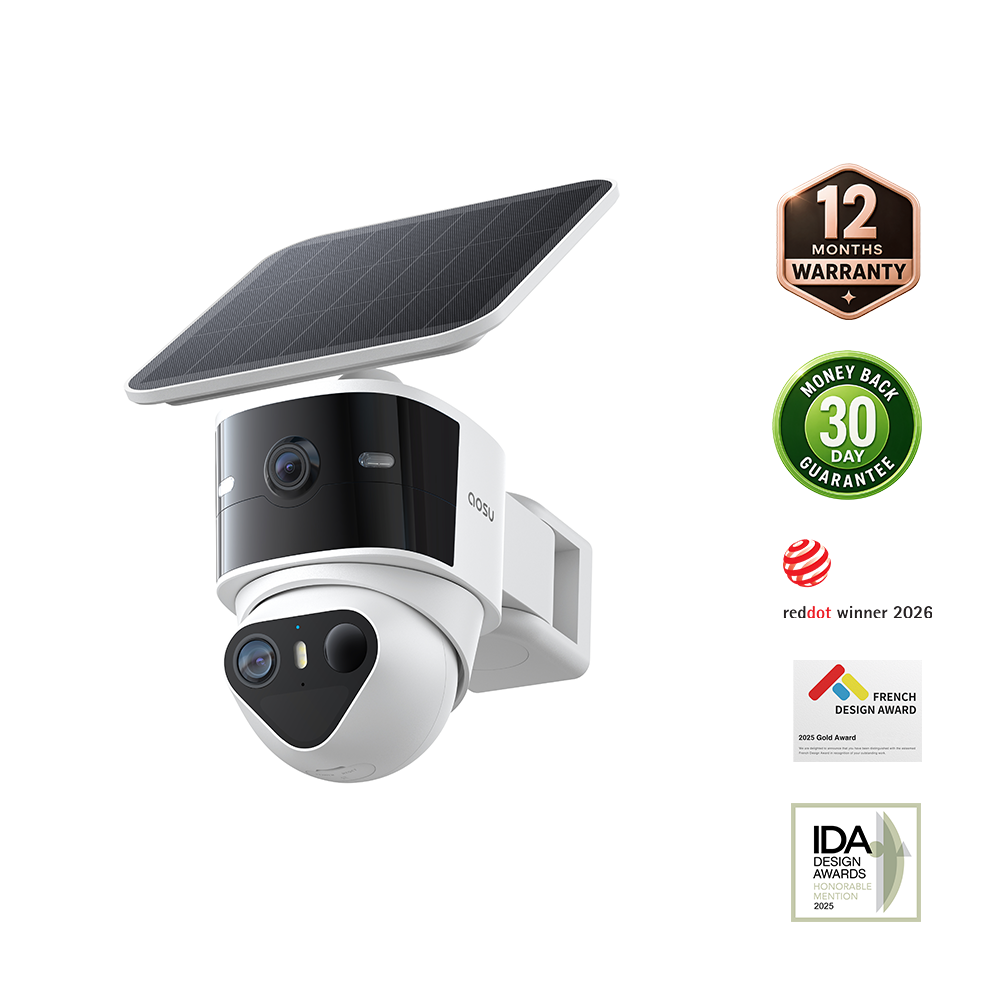
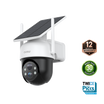
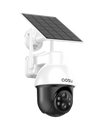
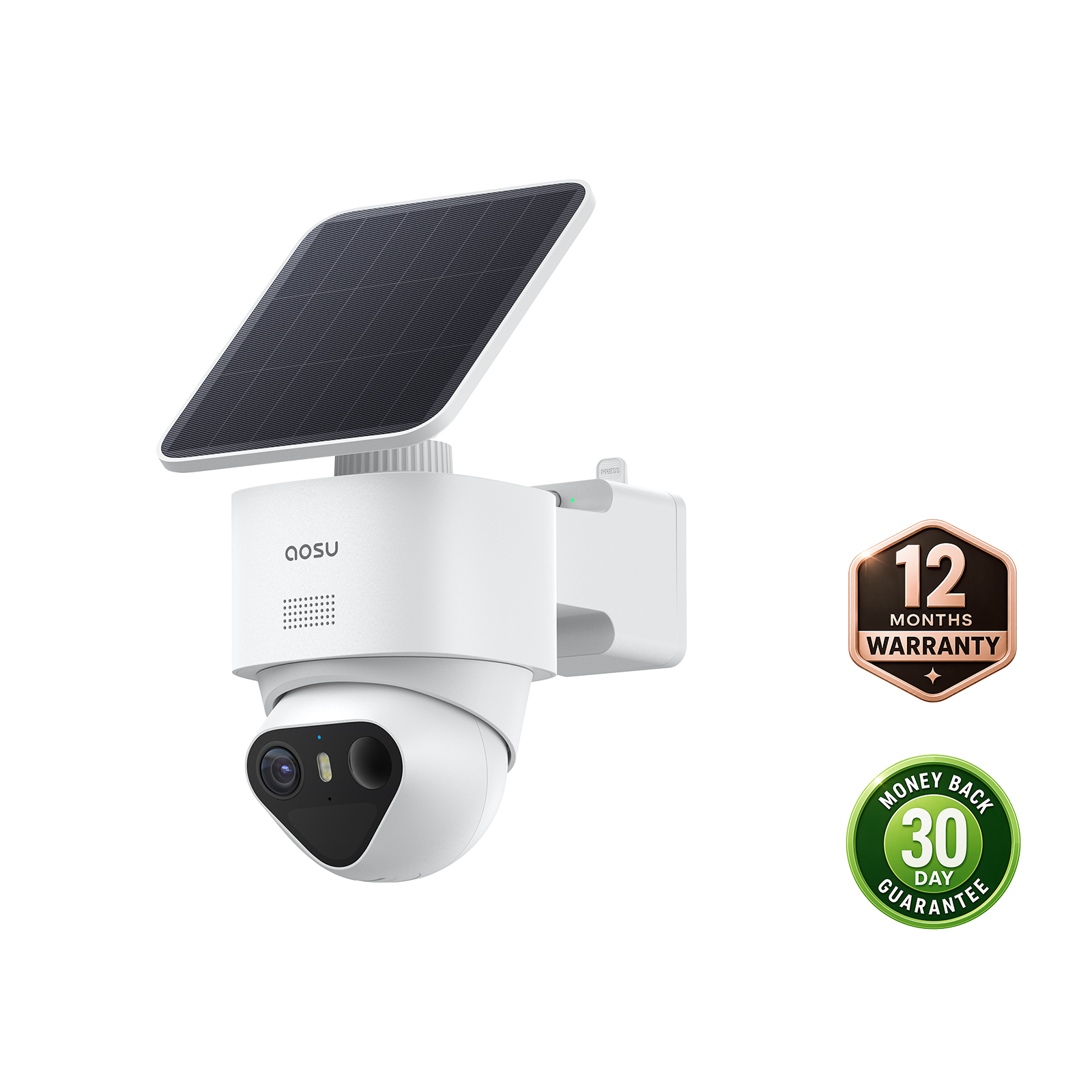
SolarCam T2 uses separate wide and 8 mm telephoto lenses. Each provides a 3K view, and the app shows the wide and telephoto feeds stacked together. The telephoto feed is a separate native view rather than a crop from the wide feed, so it begins with a narrower optical view of distant activity.
The camera also offers a 1-8x hybrid zoom range that can enlarge either feed. Its closer view is therefore telephoto-assisted, with digital enlargement available for further inspection.
SolarCam T2 should not be described as a conventional optical-zoom camera. It does not use one mechanically changing zoom lens to move continuously through the advertised range. The accurate description is a dual-lens camera with separate wide and fixed telephoto views plus hybrid zoom.

SolarCam T2 begins with separate native wide and fixed-telephoto views. Digital enlargement can then be applied to the telephoto feed for additional reach.
Related links:
· See how SolarCam T2 combines its wide and telephoto views
· Learn how dual-lens security cameras preserve context and detail
Which Zoom Type Fits Your Outdoor Area?
The best security camera with zoom is not automatically the one with the largest number. It is the one whose native view and zoom method fit the distance, area, and level of detail you actually need.
Choose motorized optical zoom when:
· One camera needs to inspect several distances or change framing regularly
· You want adjustable native magnification before digital enlargement
· The added size, cost, and power requirements fit the installation
Choose telephoto-assisted dual lenses when:
· You need a wide overview and a closer view of a predictable distant zone
· Keeping context visible while inspecting detail matters
· A fixed telephoto view fits the driveway, yard, gate, or property line
Digital zoom may be enough when:
· The monitored area is compact and subjects already appear reasonably large
· Zoom is mainly for occasional live-view or playback inspection
· You can place the camera close to the route people must use
Evaluate hybrid zoom by its components when:
· You want more reach than a single wide camera provides
· The manufacturer clearly explains the native lenses, sensors, and digital portion
· Real sample footage confirms that the system works at your intended distance
What Matters More Than the Zoom Number
1. Subject size in the native frame: A distant face that occupies only a few pixels will not become reliable evidence simply because the app enlarges it. Look at how large the subject appears before heavy digital scaling.
2. Lens and field of view: A wider view covers more area but spreads the available pixels across more of the scene. A narrower telephoto view covers less area and can devote more of the frame to the distant target.
3. Resolution and image processing: Higher resolution can provide more room to crop, but only when the lens, focus, lighting, sensor, bitrate, and compression preserve that detail. A megapixel figure by itself is not an identification guarantee.
4. Day and night performance: A zoom method that looks strong in daylight may struggle with motion or noise at night. Check the lighting, actual target distance, and whether moving subjects remain clear.
5. Mounting distance and angle: Good placement often improves useful detail more than a larger digital zoom number. Mount the camera close enough to the important route and avoid extreme downward or sideways angles.
6. Recorded footage, not only live view: Test saved clips as well as the live feed. Compression, network conditions, and recording settings can make playback look different from a product demo or still image.
Related links:
· See why security camera footage can lose fine detail
· Compare 2K and 4K security camera resolution
How to Test Zoom Before You Rely on It
For face or license-plate questions, use real installation tests rather than a general zoom claim. Readability changes with distance, angle, motion, lighting, reflection, weather, and camera settings, and a general outdoor security camera is not automatically a dedicated plate-recognition camera.
1. Use the real target distance: Place a person, vehicle, or printed test target at the exact distance you care about.
2. Record in daylight and at night: Use the lighting the property normally has instead of judging only a bright daytime view.
3. Include motion: Capture both still and moving subjects because motion blur can hide detail that looks clear in a paused scene.
4. Review the saved clip: Inspect the recording at normal size before zooming, then compare the wide, telephoto, optical, or hybrid views available.
5. Judge repeatable detail: Confirm that the information you need is consistently visible without relying on sharpening or an enlarged preview alone.

Real T2 Ultra footage showing an original 4K frame and a digital enlargement from the same recording. Digital zoom makes the subject larger but does not create new detail.
Common Zoom Mistakes to Avoid
1. Comparing x numbers without the starting view: An 8x label based on a very wide image is not directly comparable with 8x that begins from a dedicated telephoto view.
2. Calling every telephoto camera optical zoom: A fixed telephoto lens uses optics to create a closer view, but it does not zoom unless its focal length can change.
3. Assuming PTZ always includes optical zoom: Pan and tilt describe camera movement. A PTZ camera may use optical, digital, or hybrid zoom, so check the lens specification separately.
4. Treating hybrid zoom as standardized: The term can describe different combinations of lenses and processing. Compare the underlying system, not only the label.
5. Expecting zoom to correct poor placement: No zoom system can fully compensate for a blocked view, excessive distance, weak lighting, steep angle, or heavy motion blur.
To Wrap Up
In the optical zoom vs digital zoom comparison, optical zoom usually preserves more native detail because the lens changes the image before capture. Digital zoom crops and enlarges what is already there. A separate fixed telephoto lens can provide a genuinely closer native view without being a conventional zoom lens, while hybrid zoom combines optical or telephoto input with digital processing.
For outdoor security cameras, choose based on the source image at the distance you care about, not the largest multiplier on the box. SolarCam T2 is a useful example of the distinction: it pairs separate wide and telephoto 3K views with digital enlargement, so it is accurately described as telephoto-assisted hybrid zoom rather than conventional optical zoom.
FAQs
Is optical zoom better than digital zoom for security cameras?
Optical zoom is generally better for preserving distant detail because it changes focal length before the image reaches the sensor. Digital zoom can still be useful for inspection when the original image already contains enough detail.
Does digital zoom improve image quality?
No. Digital zoom can make a subject larger on screen, but it does not add scene detail that the sensor did not capture. It may also make blur, noise, and compression more visible.
Is a telephoto lens the same as optical zoom?
No. A telephoto lens has a longer focal length and narrower field of view, but it may be fixed. Optical zoom requires a lens system that changes focal length through a range.
What does hybrid zoom mean on a security camera?
Hybrid zoom combines more than one method, such as optical zoom plus digital enlargement or separate wide and telephoto lenses plus digital cropping. Because the term is not standardized, check how each camera creates its zoomed view.
Is SolarCam T2 an optical zoom security camera?
Not in the conventional sense. SolarCam T2 uses separate fixed wide and 8 mm telephoto lenses, shows both 3K feeds in the app, and adds a 1-8x hybrid zoom range. It does not use one mechanically changing optical zoom lens.